
Awardees of the 2026 $500 Research Grants for Graduate and Undergraduate/Post- Baccalaureate Students Students

Society for the Advancement of Psychotherapy
July 9, 2026

Congratulations to our winners! Click here for more information on the grant.

Ms. Maya E. Amestoy, MA
University of Toronto Scarborough
The title of research project: Evaluating the Effectiveness of A Novel Treatment Approach for Self-Stigma in Borderline Personality Disorder (BPD-BOOST)
Summary:This project aims to evaluate the effectiveness of Borderline Personality Disorder: Overcoming the Obstacles of Stigmatizing Thoughts (BPD-BOOST), a novel virtual group intervention designed to reduce self-stigma and improve self-worth among individuals living with borderline personality disorder (BPD). Self-stigma is a significant barrier to recovery, contributing to shame, reduced self-esteem, poorer quality of life, and decreased engagement in mental health care. Through an eight-week, co-designed intervention that combines psychoeducation, cognitive restructuring, emotion regulation, and peer support, this study will examine changes in self-stigma, perceived public stigma, shame, and self-esteem among participants. Grant funding will support participant compensation, enabling completion of data collection and ensuring adequate participation in study assessments. Findings will contribute to the development of recovery-oriented, stigma-focused interventions that may improve outcomes for individuals with BPD.

Ms. Lia Anh Bauert, Doctoral candidate
University of North Carolina at Charlotte – Health Psychology Program, APA-accredited clinical concentration
The title of research project: Binge Eating, Managing Eating and Exercise (BE MEE) Program – Qualitative Evaluation
Summary: The present project evaluates the perceived acceptability, appropriateness, and feasibility of an adapted internet-based, integrative, guided self-help program (i.e., the Binge Eating, Managing Eating and Exercise, BE MEE, program) for women who report binge eating and time constraints in making behavior change. We are using a mixed-methods, participatory action research approach, with theatre testing, to gather qualitative and quantitative feedback from target users to inform a future pilot study. Recognizing the need for accessible care, the program aims to expand weight‑neutral, flexible self‑help options for individuals with binge eating. The grant helps fund participant compensation for their invaluable expertise and lived experiences in improving the program, as well as the software needed for qualitative analysis.

Ava Alayna Code, Undergraduate student
Oregon State University
The title of research project: Relational Virtues as Strengths in Therapeutic Work: Implications for Burnout and Engagement
Summary: Suicide remains a leading cause of death worldwide, placing psychotherapists in a critical position to accurately assess and respond to suicide risk. At the same time, therapist burnout (characterized by emotional exhaustion, depersonalization, and reduced professional efficacy) has become increasingly common across mental health professions. Although burnout is linked to diminished empathy and treatment effectiveness, its impact on clinical decision-making, particularly suicide risk assessment accuracy, remains understudied. This study examines whether psychotherapist burnout predicts decreased accuracy in evaluating suicide risk, linking clinician well-being to client safety. Findings may support structured assessment tools and guide training, supervision, and policies that promote therapist sustainability. Burnout has been associated with reduced empathy and effectiveness, while suicide risk assessment requires accurate interpretation, integration of risk factors, and professional judgment, often supported by tools like the Columbia Suicide Severity Rating Scale (C-SSRS). Licensed psychotherapists (N = 300) will complete validated measures and evaluate standardized video vignettes, with accuracy defined as agreement with expert consensus ratings. Data will be analyzed using regression models controlling for demographic and professional variables to determine whether burnout predicts assessment accuracy.

Kailin Huang, Undergraduate Thesis Student
University of Massachusetts Amherst
The title of research project
Existential Isolation as a Mediator of the Alliance–Outcome Association in Naturalistic Psychotherapy
Sumarry: My research examines the role of existential isolation (EI)—an individual’s subjective lack of experiential connection with others—in psychotherapy. Higher EI is associated with maladaptive psychological consequences and poorer treatment outcomes. Conversely, EI may be a malleable during-treatment relational experience that, if improved, could be therapeutic. This study tested, in temporal sequence, the indirect association of patient-rated early alliance quality and posttreatment outcome through EI in the context of current naturalistic therapy. Although patients’ early alliance quality did not predict subsequent EI or posttreatment outcome, patients with lower subsequent EI reported significantly better posttreatment outcomes. Thus, EI is a facilitative factor that should be more explicitly targeted across any form of outpatient psychotherapy. I will use the SAP Student Research Grant to travel to and present this work at the 2026 meeting of the North American Society for Psychotherapy Research (NASPR) in New York from October 14–16.

Adelaide Jones, M.A.
Ferkauf Graduate School of Psychology
The title of research project
Expanding and Modernizing Routine Outcome Monitoring at a Community Mental Health Clinic: A Case Study
Summary: This project evaluates the implementation of an expanded, modernized Routine Outcome Monitoring (ROM) system at the Max and Celia Parnes Clinic, a community mental health training clinic in the Bronx. Using a mixed-methods, longitudinal design, we will assess clinician attitudes, adoption barriers, and early clinical utility as roughly 42 doctoral-level clinicians transition from paper forms to an automated Qualtrics platform with added weekly measures across cognitive-behavioral and psychodynamic treatments. By examining how measurement-based care can be integrated without compromising therapeutic alliance, the study aims to produce a practical model for sustainable ROM adoption and to establish a longitudinal psychotherapy database supporting research on underrepresented populations. Grant funds will support an implementation specialist who will optimize the clinic’s Qualtrics infrastructure to streamline ROM data collection and clinic processes, directly improving the feasibility, fidelity, and patient and clinician experience this project depends on.

Elisa Nombela Román, PhD Student
Universidad Complutense de Madrid.
The title of research project: Personalized Treatment Selection for Adult Depression: Predicting Long-Term Outcomes Using Individual Participant Data Network Meta-Analysis
Summary: This project aims to improve personalized treatment selection for adult depression by identifying which patients benefit most from different evidence-based psychological treatments over the long term. Using individual participant data from randomized clinical trials, the study will examine depressive symptom trajectories at follow-up and develop multivariable prediction models to better understand sustained treatment effects and relapse prevention. The grant will support key research activities including data harmonization, statistical analyses, and dissemination of findings, contributing to the advancement of precision psychotherapy and individualized mental health care.
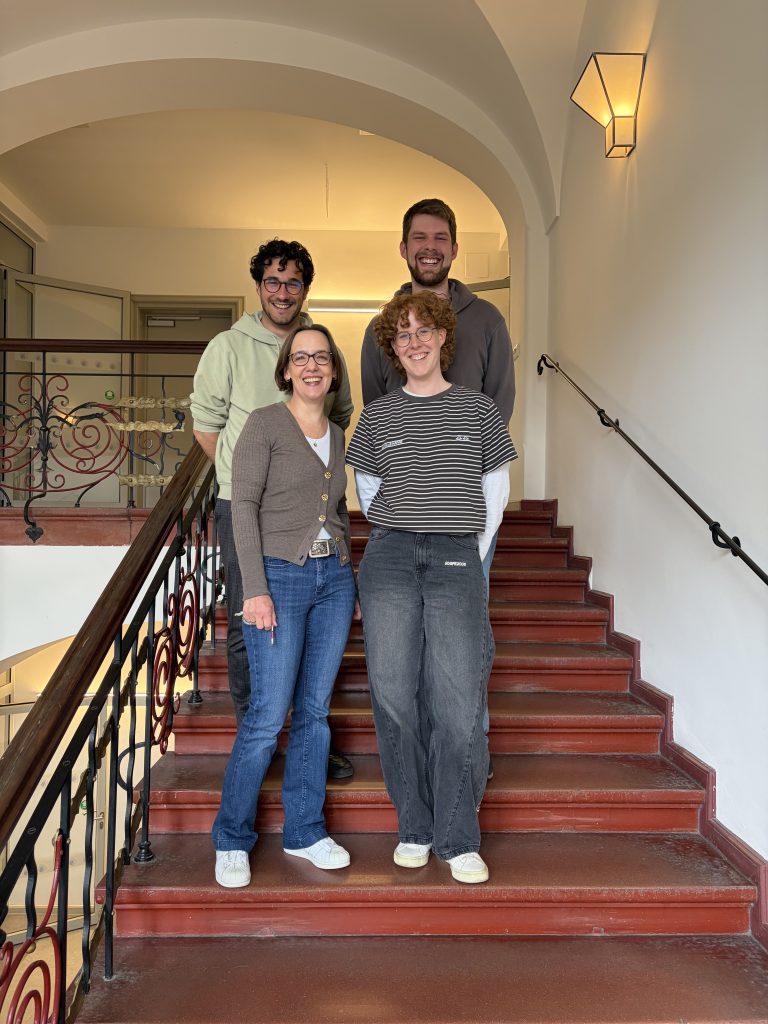
Laura Marina Hede Schlögl (B.Sc), Student Assistant
Department of Clinical Psychology and Psychotherapy, University of Bamberg (DE)
The title of research project: German Translation and Psychometric Validation of the UTAUT-AI-DMHI Questionnaire
Summary: This project aims to translate, culturally adapt, and psychometrically validate the first German-language version of the UTAUT-AI-DMHI questionnaire (Békés et al., 2025), a measure designed to assess acceptance of AI-based digital mental health interventions in psychotherapy. Rising demand for psychotherapy, combined with increasing public use of AI-based conversational systems for emotional support, highlights the urgent need for evidence-based research on how clinicians, patients, and the public perceive and accept AI-supported tools in mental health care. Currently, no validated German instrument exists to systematically investigate these attitudes, limiting implementation research and cross-cultural comparison. Using established international standards for translation and instrument validation, this study will evaluate the questionnaire’s reliability, factor structure, and validity in a German-speaking sample of mental health professionals, patients, and individuals interested in digital mental health. Grant funding will support professional translation procedures, participant compensation to ensure adequate sample size and data quality, and dissemination of findings through open-access publication. The resulting instrument will provide an important methodological foundation for future research and could potentially inform safe, ethical, and evidence-based integration of AI technologies into psychotherapy.

Elizabeth (Liz) Szanton, PhD student
University of Minnesota
The title of research project: Assessing the Impact of Conversion Therapy Laws on Psychotherapy Effectiveness Among Sexual Minority College Students
Summary: This project aims to examine whether conversion therapy laws at the state and city/county level impact psychotherapy effectiveness among sexual minority college students. Better understanding the complex interplay between structural stigma and psychotherapy outcomes will advance the identification of risk and protective factors for emerging adults vulnerable to adverse psychosocial and treatment outcomes. A Society for the Advancement of Psychotherapy (SAP) Student Research Grant will support this project by contributing to conference registration and travel costs or to an open-access fee for publishing the results in a peer-reviewed scholarly journal.

Yiru Wang, Undergraduate Student
Mount Holyoke College
The title of research project: Naming and Treating Political Distress: A Diary-Based Pilot Intervention and Test–Retest Validation Study
Summary: Amid increasingly polarized and unstable sociopolitical climates worldwide, mental health professionals are encountering clients whose suffering stems from chronic exposure to adverse sociopolitical conditions rather than discrete traumatic events. Yet the field lacks validated assessment tools and evidence-based interventions dealing with this experience. To address this gap, I initiated this four-study mixed-methods program, mentored by Prof. John Tawa, which has produced the Political Distress Scale (PDS-16), a 16-item measure developed through qualitative content validation, exploratory factor analysis, and confirmatory factor analysis. With support from the Society for the Advancement of Psychotherapy, the next phase will pilot a diary-based writing intervention that incorporates computational text analysis while establishing test–retest reliability in a sample of Gen Z young adults. Together, these efforts aim to bring greater visibility to political distress as a clinical phenomenon and to explore approaches for addressing it in psychotherapy practice.
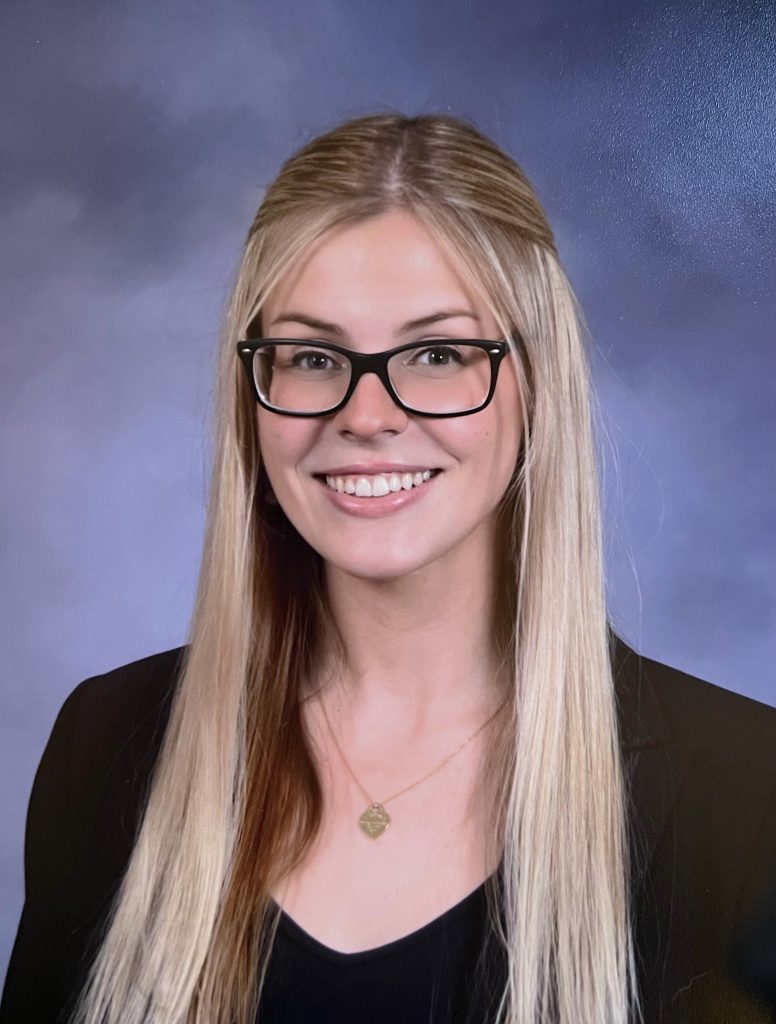
Bo Dehm Wicklund, B.A.
VA Palo Alto; Stanford University School of Medicine
The title of research project: Stability in Cognitive Outcomes Following Esketamine Treatment in Veterans with Major Depressive Disorder: Evidence from the Repeatable Battery for the Assessment of Neuropsychological Status (RBANS)
Summary: My project evaluates the cognitive impact of esketamine, a rapid-acting, FDA-approved intervention for treatment-resistant major depressive disorder. While esketamine’s rapid antidepressant effects are well established, concerns remain regarding potential cognitive sequelae given its dissociative properties and glutamatergic mechanism of action. Using the Repeatable Battery for the Assessment of Neuropsychological Status (RBANS), we examined pre- to post-treatment changes across five clinically relevant cognitive domains in Veterans receiving esketamine at the VA Palo Alto: Immediate Memory, Visuospatial/Constructional Abilities, Language, Attention, and Delayed Memory. Results demonstrated cognitive stability across domains, supporting that esketamine does not compromise cognitive functioning in this real-world Veteran cohort. The findings address a critical gap in the psychotherapy literature by demonstrating that esketamine does not compromise core cognitive processes necessary for successful psychotherapy engagement, as most esketamine research focuses on symptom reduction, rather than cognitive functioning. As esketamine expands across VA and community settings, characterizing cognitive outcomes will inform best practices for monitoring, refine clinical protocols, and advance its role as a safe and scalable intervention for Veterans with treatment-resistant depression, including its use alongside psychotherapy. Support from this award accelerates the dissemination of these findings to scientific and clinical audiences as this work was accepted and presented as a poster abstract at the Society of Biological Psychiatry (SOBP) 2026 Annual Meeting.
Tags
Comments
Be the first to share your thoughts.
Leave a comment
Your email address will not be published. Comments are reviewed before they appear.