
Digital Therapeutics and Mental Health Apps: What Should Therapists Know?

Noel Cooper, PsyD
September 9, 2026
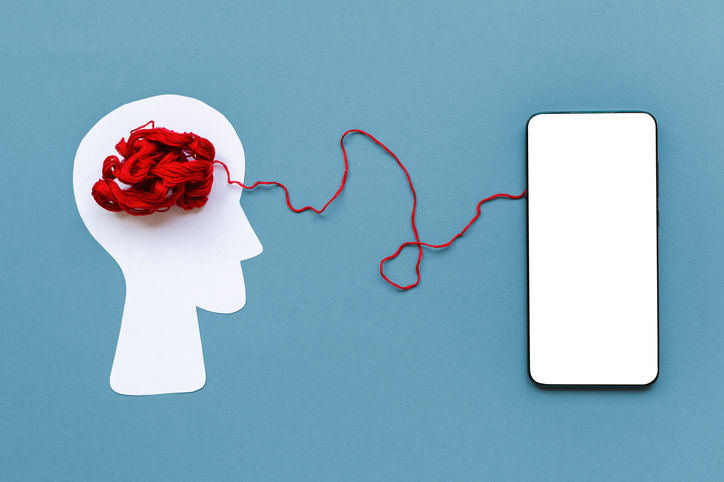
In this day and age, the vast majority of our therapy clients have smartphones. Many clients are using, or at least monitoring, their phone nearly constantly throughout the day. Clients use their phones for entertainment and social media, but also practical daily living tasks like communication, navigation, checking their finances, and even monitoring their physical health. It only makes sense that therapists and clients would want to tap into that continual source of contact to engage with mental health resources. There are many options and opportunities for utilizing mental health apps either in conjunction with therapy or as a standalone intervention, from prescription-only apps to mass-market apps. However, as with any intervention or technology, there are also risks and challenges. This article serves as an introduction to the topic.
Digital Therapeutics
While the term digital therapeutics (DTx) is sometimes used more generally, it specifically refers to apps or other software that are monitored and regulated by the Food and Drug Administration (FDA). The FDA classifies them in the category of Software as a Medical Device (SaMD) (Food and Drug Administration, 2026). In order to be approved by the FDA, the software or app must deliver evidence-based treatment, with support from multiple clinical trials (Phan, 2023). In addition to clinical efficacy, the FDA also examines the DTx software for issues of cybersecurity and data protection. The FDA has approved a number of DTx in multiple areas of medical treatment, including behavioral health, chronic pain, diabetes, cardiovascular health, and others (Phan, 2023).
DTx must be prescribed by a licensed healthcare provider, which may include psychologists, and are not available to the general public. Clients are required to enter a personalized access code or similar authorization to access the app. Some apps are designed to be standalone, with little to no practitioner guidance, whereas others are designed to be used in conjunction with ongoing mental health services from a provider. In November 2024, three new reimbursement codes were approved by the Centers for Medicare and Medicaid Services (CMS) for practitioners utilizing DTx (Stringer, 2024). These codes allow providers to bill for reimbursement for time spent reviewing data and managing treatment through a DTx app. Some examples of DTx apps are Rejoyn, for major depressive disorder; Mamalift Plus, for postpartum depression; DaylightRx for generalized anxiety disorder; ReSET for substance abuse disorders; SleepioRx for insomnia; and EndeavorRx for Attention-Deficit/Hyperactivity Disorder (ADHD). Some DTx apps are based on pre-existing psychological interventions. For example, SleepioRx is an app-based implementation of Cognitive Behavioral Therapy for Insomnia (CBT-I), an established treatment for insomnia, and many apps use concepts and interventions from Cognitive Behavioral Therapy (CBT) as part of their theoretical framework. Other apps, however, are novel interventions not based on traditional therapeutic modalities. EndeavorRx is a video game that targets attention functioning to improve ADHD symptoms. Other apps utilize sensor data or other wearable technology as part of the app functionality; Freespira uses a compact breathing sensor to help clients alter the dysfunctional breathing patterns associated with panic attacks.
DTx have many benefits. FDA approval indicates a level of scientific evidence behind the intervention as well as clinical safety. FDA approval also involves ongoing regulatory review and monitoring. For apps that are designed to be standalone, therapists can prescribe them for clients on a waitlist or as part of an aftercare strategy. Alternatively, therapists could use an app as an adjunctive part of treatment to either support treatment goals (e.g., using ReSET for between-session support) or to address additional treatment goals (e.g., using SleepioRx to target insomnia symptoms while the therapist focuses on trauma symptoms). The design of DTx allows therapists to expand their clinical reach and increase access to evidence-based care for clients. However, getting FDA approval is a rigorous process that is not attainable for all programs. Additionally, not all individuals have access to a medical provider to prescribe these interventions, or the financial ability, through insurance or self-pay, to afford these services. As a result, many individuals turn to mass-market mental health apps.
Mental Health Apps
Mass-market mental health apps are a large category of apps that address a wide range of problems related to mental health. Apps may require a one-time payment, a subscription service, or they may be free (or have a free tier). They have a varying level of scientific evidence behind them, with varying levels of involvement from mental health professionals. Mental health apps cannot make claims about treating particular mental health diagnoses, though they can target depression, anxiety, or mental well-being in a general way. Some apps advertise their involvement in clinical research, though others do not. Overall, research found general support for the effectiveness of mental health apps for at least some symptoms, although findings are highly variable (Kushlev et al., 2026; Shahsavar & Choudhury, 2025).
Apps that are more effective tend to utilize many elements from CBT approaches, including psychoeducation, relaxation, mindfulness, self-monitoring, desensitization, stimulus control, and activity scheduling (Kraiss et al., 2026). Journaling is another activity that apps offer, either as a standalone or incorporated into other interventions (Wasil et al., 2022). Artificial intelligence (AI) chatbots specifically designed for therapeutic responses are another growing area, either on their own or as one component of an app that offers additional intervention options (Chiu et al., 2024).
A mental health app may provide more convenience and access than traditional therapy. Users can access the app on their schedule based on their immediate needs. For example, a client who is having a panic attack can utilize an app to lessen their panic symptoms in the moment, rather than waiting for an in-person session at a later time. An individual who is having trouble sleeping due to anxiety before a big exam can utilize a meditation and mindfulness app the night before. This ease of access can be a motivator for app use (Holtz et al., 2025). Users may also associate less stigma with use of a smartphone app rather than seeking in-person mental health treatment (Groot et al., 2026).
While mental health apps show promise, there are also many concerns regarding safety and effectiveness. Mental health apps that are not grounded in evidence-based practice may be ineffective or even harmful. User engagement with mental health apps is often inconsistent, which may reduce their potential benefits (Sullivan et al., 2026). Additionally, mental health apps vary considerably in the crisis resources they provide to users experiencing suicidal ideation or other mental health crises (Dwyer et al., 2025). Because these apps are not regulated, there are few to no safeguards in place to protect consumers.
In addition to the clinical considerations, app users must also be aware of technological risks. Does the app have infrastructure for storing client information securely? Does the app track user data outside the app for any reason? Does the app sell or share user data with other companies or organizations? What happens with client data if the app company is sold or goes out of business? These questions are usually not at the forefront of consumers’ minds but can have a serious impact if user data is misused or compromised.
To address many of these issues, APA Labs has developed the Digital Badge Program for mental health apps. Apps are assessed in six areas: product clarity and transparency, scientific principles, regulation and safety, data protection and privacy, technical security and stability, and usability and accessibility (APA Labs Digital Badge Solutions, n.d.). They have additional criteria for assessing AI as part of an app. The APA Labs then awards a Bronze, Silver, or Gold Badge to the app based on their overall assessment. The badge does not necessarily measure the efficacy of the app intervention, just its scientific backing. APA Labs was launched in February 2025 to focus on the intersection of psychology and technology, so it is a relatively new enterprise and only a few apps have been awarded Digital Badges to date. To explore their Solutions Library, visit their website at https://apa.orchahealth.com/en-US.
Clinical Application
If therapists are interested in prescribing and utilizing DTx, the first step is to contact the companies that provide these programs. Many of them offer training on using the app and adopting it into the practitioner’s workflow. Therapists should also talk to the insurance companies that they work with to see what is typically covered for patients and how the reimbursement process works for clinicians. Before prescribing DTx, therapists should engage clients in a detailed informed consent process to make sure that they are aware of all the possible risks and benefits associated with use of the DTx program.
Therapists who aren’t interested in making a prescription but would still like to take advantage of mobile mental health technology can turn to the mass market mental health apps. For example, a therapist might suggest that a client use mindfulness exercises from the Calm app as part of their weekly self-care routine, or they might use an app like Suicide Safety Plan, which is an electronic version of the standard safety plan used with clients with suicidal ideation. Therapists should be knowledgeable and well-informed about any apps they suggest to clients and should include a discussion of the risks and benefits of using the app.
Even therapists who aren’t interested in engaging clients with mental health apps at all should still be aware of this technology space. In 2025, the American Psychological Association released a health advisory on the use of generative AI chatbots and wellness applications for mental health to provide guidance for the field of psychology on how to engage with the burgeoning field of mental health technology (American Psychological Association, 2025). Therapists should routinely ask what, if any, technology clients are engaging in related to their mental health. Surveys show that even individuals who are already in psychotherapy are engaging with AI chatbots between therapy sessions (American Psychological Association, 2026). Therapists should discuss the potential risks and benefits of these apps with clients, with particular attention to their personal vulnerabilities and concerns.
New technology provides new opportunities and new hazards for the field of mental health. Therapists should be educated about the possibilities and prepared to safeguard clients from the dangers while collaborating with them to use mental health apps appropriately for therapeutic benefit.
Tags
About the Author
Noel Cooper, PsyD
Dr. Cooper is a licensed clinical psychologist in Southern California. She is the Director of Psychological Services of Riverside, a doctoral training clinic, and Associate Professor at California Baptist University.
Citation
References
American Psychological Association. (2025). Health advisory: Use of generative AI chatbots and wellness applications for mental health. https://www.apa.org/topics/artificial-intelligence-machine-learning/health-advisory-chatbots-wellness-apps
American Psychological Association. (2026). Patients are bringing AI to therapy. https://www.apa.org/pubs/reports/chatbots-mental-health-2026
APA Labs Digital Badge Solutions. (n.d.) Criteria. https://apa.orchahealth.com/en-US/criteria
Chiu, Y.-H., Lee, Y.-F., Lin, H.-L., & Cheng, L.-C. (2024). Exploring the role of mobile apps for insomnia in depression: Systematic review. Journal of Medical Internet Research, 26. https://doi.org/10.2196/51110
Dwyer, B., Mikkelson, J., Burns, J., Diaz-Pacheco, V., & Torous, J. (2025). Mental health apps and crisis support: Exploring the impact of 988. Psychiatric Services, 76(10), 867–871. https://doi.org/10.1176/appi.ps.20240485
Food and Drug Administration. (2026, July). Digital Health Center of Excellence. https://www.fda.gov/medical-devices/digital-health-center-excellence
Groot, J., Ainsworth, B., Gjersoe, N., Clarke, C., Hamshaw, R., Brosnan, M. (2026). Understanding university students’ experiences of engaging with AI and apps for their mental health and well-being: Qualitative study. Journal of Medical Internet Research, 28. https://doi.org/10.2196/75381
Holtz, B. E., Kanthawala, S., Martin, K., Nelson, V., & Parrott, S. (2025). Young adults’ adoption and use of mental health apps: Efficient, effective, but no replacement for in-person care. Journal of American College Health, 73(2), 602–610. https://doi.org/10.1080/07448481.2023.2227727
Kraiss, J., Fiß, F., Chakhssi, F., Aktas, F. B., Koelen, J. A., & Simões, J. P. (2026). Identifying what works in mental health apps through meta-regression analyses of 169 trials. npj Digital Medicine, 9, 336. https://doi.org/10.1038/s41746-026-02466-z
Kushlev, K., Moon, K., Harris, M., & Falgoust, G. (2026). The promise and peril of mental health apps. Policy Insights from the Behavioral and Brain Sciences, 13(1), 101-110. https://doi.org/10.1177/23727322251405255
Phan, P, Mitragotri, S., & Zhao, Z. (2023). Digital therapeutics in the clinic. Bioengineering & Translational Medicine, 8:e10536. https://doi.org/10.1002/btm2.10536
Shahsavar, Y, & Choudhury, A. (2025). Effectiveness of evidence based mental health apps on user health outcome: A systematic literature review. PLoS ONE, 20(3), e0319983. https://doi.org/10.1371/journal.pone.0319983
Stringer, H. (2025, November 12). New reimbursement pathways have opened doors for using digital therapeutics. https://www.apaservices.org/practice/business/technology/tech-talk/reimbursement-pathways-digital-therapeutics
Sullivan, M., Cloonan, S., Huberty, J., & Stecher, C. (2026). What predicts meditation app engagement? An evaluation of user characteristics and motivation. Psychology & Health. https://doi.org/10.1080/08870446.2026.2648854
Wasil, A. R., Palermo, E. H., Lorenzo-Luaces, L., DeRubeis, R. J. (2022). Is there an app for that? A review of popular apps for depression, anxiety, and well-being. Cognitive and Behavioral Practice, 29(4)883-901. https://doi.org/10.1016/j.cbpra.2021.07.001
Comments
Be the first to share your thoughts.
Leave a comment
Your email address will not be published. Comments are reviewed before they appear.