
Student Therapists Seek Out Client Information Online

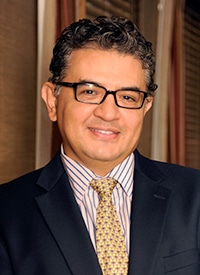
Valentina Stoycheva & Jairo N. Fuertes, Ph.D., ABPP, LMHC
February 21, 2012

Few clinicians would dispute their clients’ right to privacy, including when and to what extent to share personal information in therapy. However, as DiLillo and Gale (2011) point out, the current advances in the use of the Internet – such as the development of search engines and social networks, for example – have led to certain dissolution of interpersonal boundaries and expectations of privacy. Interested in the attitudes and behaviors of student therapists toward the use of websites to obtain information about their clients, the authors surveyed 854 psychology doctoral students in the United States and Canada.
They found that almost all of the surveyed therapists in training who reported seeing clients had also used a search engine (e.g., Google) or a networking website (e.g., Facebook or MySpace) to gather information about a client. Interestingly, over two-thirds of them also reported that they believed it was either always unacceptable or usually unacceptable to use the Internet to obtain information about clients. While in most cases the therapists indicated that their clients were aware of the conducted online searches, almost 20% of clients were reported to have not been informed of it. The study’s authors discuss this discrepancy between clinical trainees’ attitudes and behaviors in light of the increasing role of the Internet in people’s lives. They further address possible interpretations of their findings, as well as their ethical and educational implications.
About the Author
Jairo N. Fuertes, Ph.D., ABPP, LMHC
Jairo N. Fuertes, PhD, ABPP, LMHC is Professor of Psychology in the Gordon F. Derner School of Psychology at Adelphi University and Clinical Assistant Professor of Medicine and Psychiatry in the Donald and Barbara Zucker School of Medicine at Hofstra/Northwell. He served as Senior Associate Editor of Behavioral Medicine from 2020 to 2024, and has served on the editorial boards of other top-tier journals, including Psychotherapy and Psychotherapy Research. Dr. Fuertes is a fellow of the American Psychological Association (Divisions 12 and 29) has previously served as Chair of the Education and Training Committee and as Diversity Domain Representative in APA’s Division 29 (Psychotherapy). He is a licensed psychologist and mental health counselor in New York State, and is board certified in both clinical and counseling psychology by the American Board of Professional Psychology. For over 20 years he has been a Supervising Psychologist in the Counseling Center at Baruch College, The City University of New York; he also maintains a bilingual private practice in Garden City, NY.
Dr. Fuertes is an immigrant from Colombia, South America. He arrived in the U.S at the age of 10, and graduated from the public school system in Montgomery County, Maryland. He is also a “Triple Terp”, having obtained his Bachelor’s, Master’s, and Doctoral degrees from the University of Maryland at College Park. He is a professional percussionist, having recorded several albums over his musical career. He lives with his wife Hnin and their two daughters in Garden City NY.
Citation
References
No references.