
The Impact of Divorce on Families and Therapeutic Resolutions

Samer Shebak, MA
November 11, 2025
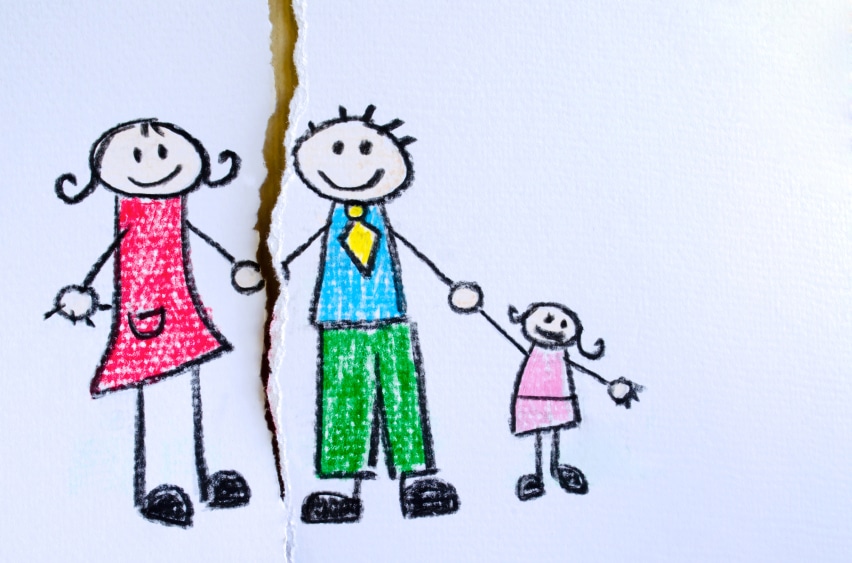
Divorce disrupts family structures and emotional bonds, creating lasting effects for both children and parents. It alters roles, routines, and relationships within the family system and impacts each family member differently. This paper explores the psychological and interpersonal impacts of divorce, especially on children and parents, and outlines therapeutic methods to support post-divorce adjustment. The discussion includes relevant theories and interventions like play therapy and co-parenting programs that can help rebuild communication and emotional well-being.
Impact of Divorce on Children
Young children, and preschool-age children in particular, are vulnerable to psychological distress following divorce due to limited emotional regulation and their cognitive development (Krasniqi, 2023). They may exhibit challenges such as aggression, withdrawal, sleep disturbances, and learning difficulties. These problems can stem from disrupted routines, inconsistent parental presence, and exposure to their parents’ problems and conflicts. Lansford (2009) notes that children of divorced parents often show higher rates of anxiety, depression, academic difficulties, and social struggles such as difficulties forming friendships, increased conflict with peers, or feelings of isolation in group settings However, the severity of outcomes depends more on factors like parental conflict, emotional availability, and economic hardship than the divorce itself. Some children benefit from reduced exposure to high-conflict environments post-divorce and adjust well once stability is restored. Greenberg et al. (2023) emphasized that children in high-conflict divorces often experience psychosomatic symptoms such as headaches and stomachaches. These arise when caregivers neglect emotional communication, causing children to express stress physically. In such cases, children may internalize blame, develop avoidance behaviors, and struggle with long-term emotional development.
Impact of Divorce on Parents
High-conflict divorces also take a psychological toll on parents. These divorces are characterized by frequent hostility, poor communication, and prolonged legal disputes that are often marked by repeated litigation, verbal aggression, and ongoing power struggles between parents (Smyth & Moloney, 2019). Guyette et al. (2025) found that parents in these dynamics often experience decreased life satisfaction, increased stress, and inconsistent patterns of parenting behaviors. Negative behaviors, like criticizing the co-parent in front of their children, can greatly hinder collaborative co-parenting efforts and may harm the children’s adjustment to the new dynamic. Economic challenges and mental health issues like depression compound parental distress (Lansford, 2009; Pedro-Carroll, 2010). Smyth and Moloney (2019) observed that emotionally overwhelmed parents often become less available to their children, resulting in strained relationships. From a psychoanalytic perspective, Donner (2006) argues that unconscious psychological vulnerabilities, such as narcissism and envy, can drive hostile custody disputes. Parents may view losing custody as a threat to their identity, prompting destructive behaviors masked as concern for their child’s welfare. Standard interventions may not suffice in such cases because they focus on surface-level conflict management without addressing the deeper psychological vulnerabilities driving hostility. As Donner (2006) explains, unresolved attachment wounds, narcissistic injuries, and unconscious envy can sustain destructive behaviors, making psychoanalytically informed therapy necessary to resolve these underlying dynamics. Amato (2000) highlights that the transition to single parenthood can reduce happiness, self-esteem, and overall life satisfaction. Parents must adjust to altered routines, loss of support, and increased responsibilities, which often result in emotional exhaustion and impaired parenting. While some eventually adapt to these changes, others remain emotionally distressed, particularly when conflict and social isolation persist.
Therapeutic Approaches to Divorce-Related Changes
Several therapeutic approaches have been shown to support children and families through this transition, including play therapy, family systems interventions, and multi-family programs. Play therapy offers a developmentally appropriate method for children to express emotions and cope with divorce-related changes. It is a therapeutic approach that uses toys, games, and creative activities to help children symbolically communicate thoughts and feelings that they may not be able to articulate verbally. By engaging in play, children can process difficult experiences in a safe and familiar medium, while therapists observe themes, provide guidance, and introduce coping strategies (Landreth, 2012). Research demonstrates that play therapy is effective in reducing emotional distress, improving self-regulation, and enhancing children’s problem-solving and relational skills (Gupta et al., 2023). Chafe (2016) underscores that play therapy can be adapted to various theoretical orientations, including cognitive-behavioral and family systems models. A study by Serter and Çelik (2023) showed that structured play therapy improved adjustment to divorce and reduced depression symptoms in children aged 9-12 years.
Chafe (2016) also discusses the importance of using family systems theory to understand the broader impacts of divorce. Experiential family therapy techniques, like using collaborative genograms, can help families explore roles and relationship dynamics through creative expression. These methods can improve communication and foster empathy among family members. Herrero et al. (2023) argue that children’s post-divorce distress stems more from instability, poor communication, and parental conflict than the divorce itself. Therapy should focus on reducing these stressors by enhancing parenting skills, maintaining co-parenting consistency, and practicing an emotion-based communication style.
Multi-family therapy (MFT) is another promising approach. Mortimer et al. (2023) evaluated a six-session MFT program for families managing post-separation conflict. The program taught emotional regulation, boundary setting, and communication techniques through both individual and group sessions. Results showed improved parental insight and child well-being, though further research is needed. An additional consideration when treating families is the complex nature of the therapeutic relationships. Günther-Bel et al. (2021) examined the complexities of building therapeutic alliances in high-conflict divorced families. This research emphasized that therapists should remain neutral, validate both parents, and navigate alliance ruptures with reflexivity. This requires therapists to actively reflect on their biases, emotional reactions, and therapeutic choices to ensure these do not negatively influence the family’s progress.
Conclusion
Divorce can significantly disrupt the family system by effecting emotional bonds, daily routines, and relational stability. Children may experience anxiety, depression, or somatic symptoms, while parents may face emotional exhaustion and diminished parenting capacity. Effective recovery requires more than legal solutions—it calls for therapeutic interventions that promote healing and resilience. Implementing child-centered play therapy, systemic models like multi-family therapy, and various strategies to reduce conflict and improve communications can support families as they navigate post-divorce transitions and learn to strengthen their new familial dynamics.
Tags
About the Author
Samer Shebak, MA
I graduated with my Master’s degree in Clinical Psychology in 2020 from The Michigan School of Psychology and am currently pursuing my Doctorate (PsyD) at the same institution. I completed my first-year practicum at Children’s Hospital in downtown Detroit, and I am now finishing my training at the Psychogenic Non-Epileptic Seizure (PNES) Clinic at Michigan Medicine. In private practice, I primarily work with children and adolescents. My main treatment modalities include Cognitive Behavioral Therapy (CBT) and various forms of play therapy. I also conduct psychological assessments for autism, ADHD, and other mental health concerns.
Citation
References
Amato, P. R. (2000). The consequences of divorce for adults and children. Journal of Marriage and the Family, 62(4), 1269–1287. https://doi.org/10.1111/j.1741-3737.2000.01269.x
Chafe, D. V. (2016). Play therapy: Concepts and techniques for working with divorce. Canadian Journal of Counselling & Psychotherapy, 50, S80–S92.
Donner, M. B. (2006). Tearing the child apart: The contribution of narcissism, envy, and perverse modes of thought to child custody wars. Psychoanalytic Psychology, 23(3), 542–553. https://doi.org/10.1037/0736-9735.23.3.542
Greenberg, L. R., McNamara, K., Weisz, B. E., Altobelli, J. T., & Davis, F. (2023). Managing children’s and adolescents’ medical complaints amid parent conflict. Family Court Review, 61(3), 522–537. https://doi.org/10.1111/fcre.12730
Günther-Bel, C., Vilaregut, A., & Linares, J. L. (2021). Towards an understanding of the within-system therapeutic alliance with high-conflict divorced parents: A change process research. Contemporary Family Therapy, 43(4), 329–342. https://doi.org/10.1007/s10591-021-09593-7
Gupta, N., Chaudhary, R., Gupta, M., Ikehara, L. H., Zubiar, F., Madabushi, J. S. (2023). Play therapy as effective options for school-age children with emotional and behavioral problems: A case series. Cureus, 15(6). https://doi.org/10.7759/cureus.40093
Guyette, E., Wilkins-Clark, R., Ferraro, A. J., Markham, M. S., Beckmeyer, J. J., & Brimhall, A. (2025). Bridging parental conflict: Findings from a parent education course. Contemporary Family Therapy, 47(1), 38–50. https://doi.org/10.1007/s10591-024-09698-9
Herrero, M., Roca, P., Cormenzana, S., & Martínez, P. A. (2023). The efficacy of postdivorce intervention programs. Family Process, 62(1), 74–93. https://doi.org/10.1111/famp.12807
Krasniqi, N. (2023). The psychological effects of parental divorce on the behavior of preschool children. Journal of Social Studies Education Research, 14(2), 51–74. https://orcid.org/0000-0002-0206-8071
Landreth, G. L. (2012). Play therapy: The art of the relationship (3rd ed.). Routledge.
Lansford, J. E. (2009). Parental divorce and children’s adjustment. Perspectives on Psychological Science, 4(2), 140–152. https://doi.org/10.1111/j.1745-6924.2009.011
Mortimer, R., Morris, E., Pursch, B., Roe, A., & Sleed, M. (2023). Multi‐family therapy for separated parents in conflict and their children: Intervention development and pilot evaluation. Journal of Family Therapy, 45(1), 94–117. https://doi.org/10.1111/1467-6427.12373
Pedro-Carroll, J. L. (2010). Putting children first: Proven parenting strategies for helping children thrive through divorce. Avery.
Serter, G. Ö., & Çelik, S. B. (2023). Structured play therapy and children with divorced parents. British Journal of Guidance & Counselling, 51(2), 191–203. https://doi.org/10.1080/03069885.2020.1840513
Smyth, B. M., & Moloney, L. J. (2019). Post‐separation parenting disputes and the many faces of high conflict: Theory and research. Australian & New Zealand Journal of Family Therapy. https://doi.org/10.1002/anzf.1346
Comments
Be the first to share your thoughts.
Leave a comment
Your email address will not be published. Comments are reviewed before they appear.