Treatment of Suicidality in Adolescents with a History of Concussions


Kayela Malewitz, BA & Stephanie Bono, JD, PhD
December 18, 2024
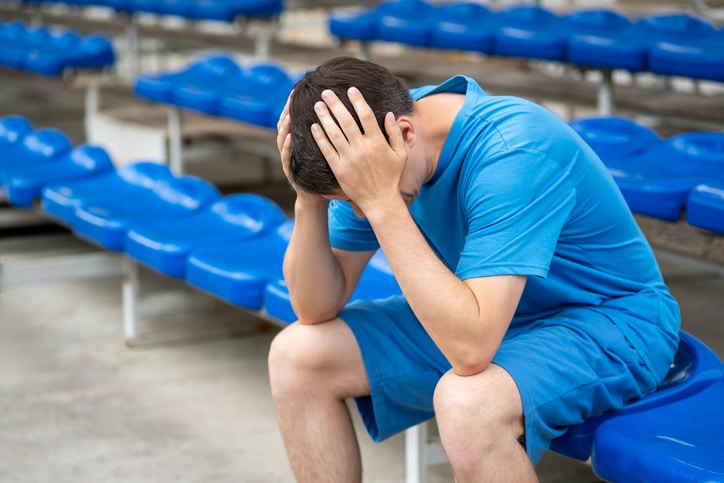
According to the Centers for Disease Control and Prevention (CDC), suicide is the third leading cause of death among adolescents 15-19 years of age (Centers for Disease Control and Prevention, 2024a). A concussion or mild traumatic brain injury (mTBI) is a risk factor for suicide in adolescents as this type of injury can increase depressive symptoms, which is a significant risk factor for attempting and completing suicide (Chrisman et al., 2021; Kay et al., 2023; McCory et al., 2013; Miller et al., 2021). According to the CDC, the current definition of a concussion is, “a type of traumatic brain injury—or TBI—caused by a bump, blow, or jolt to the head or by a hit to the body that causes the head and brain to move rapidly back and forth” (Centers for Disease Control and Prevention, 2024b, para. 1). As previously mentioned, concussions can increase suicidality due to an increased likelihood of experiencing depression (Awan et al., 2021), which could be related to isolating from peers because of said concussion (Broscheck et al., 2015 as cited in Chrisman et al., 2021). As a result, it is imperative for clinicians to screen for depression after a client experiences a concussion. When treating adolescents with a presenting concern of suicidality or suicide attempts who have a concussion history, intervention approaches, such as dialectical behavior therapy (DBT) and neurocognitive rehabilitation, are more beneficial during treatment (Adrian et al., 2019; Collins et al., 2023; Tracey et al., 2023).
High school students who have had at least one concussion are shown to be at higher risk of suicide and suicidal ideation compared to peers who have not experienced a concussion (Kay et al., 2023). This could be due to an increase in depressive symptoms and feelings of hopelessness among this particular population of adolescents. Additionally, having multiple concussions is related to increased mental health problems, such as depression, anxiety, and suicide attempts. Other stressors, such as missing class and not being able to play the sport they participate in, may also contribute to the subsequent mental health problems following a concussion (Brosheck et al., 2015, as cited in Chrisman & Richardson, 2013). Specifically, those with a concussion history are over three times more likely to have depression than their non-concussed peers and the depression is more likely to linger over time, which can be an additional risk factor for future suicide attempts (Awan et al., 2021; Hellewell et al., 2020). Because of this, it is recommended there be a screening process for depression when an adolescent is in treatment for a concussion, no matter the setting they’re in (Chrisman & Richardson, 2013). This way, based on the results of the screening, they can be referred to a therapist to address and treat any symptoms of depression they are endorsing (Master et al., 2024; O’Neil et al., 2024).
As for the treatment of suicidal ideation and attempts in adolescents with concussions, research shows that DBT and neurocognitive rehabilitation are the best courses of treatment (Adrian et al., 2019; Collins et al., 2023; Tracey et al., 2023). DBT is a type of psychotherapy that utilizes acceptance of one’s experiences and circumstances and then helps the client to learn ways to change their behaviors. This can include regulating emotions and finding ways to decrease engagement in dysfunctional behaviors by utilizing coping skills (American Psychological Association, 2018a). Because of its emphasis on skills training, DBT can help adolescents regulate their emotions and cope with the symptoms of depression and feelings of hopelessness that may be present (Berk et al., 2024). There is also research suggesting that those using maladaptive coping strategies do not recover as well as those who use effective coping strategies following a concussion (Sandel et al., 2017). If one was participating in a sport, this may have been the coping strategy they utilized prior to their concussion, eliminating a once effective coping mechanism and leaving a gap in their coping skillset. Therefore, varied and effective coping strategies to combat mental health issues are paramount during the time after the injury because a lack of healthy coping strategies could lead to increased engagement in maladaptive behaviors (Sandel et al., 2017). After completing a meta-analysis regarding the treatment of suicidal ideation in adolescents, Berk et al. (2024), found that those treated with DBT were more likely to continue progressing in treatment compared to other individual or group therapy modalities.
One treatment that has been promising for those with a history of suicidal ideation and concussions is neurocognitive rehabilitation. Neurocognitive rehabilitation or cognitive rehabilitation therapy (CRT) “focuses on restoring cognitive function through interventions or tools designed to improve memory, focus, and other cognitive skills” (National Academies, 2022, p. 116). In a meta-analysis completed by Tracey et al. (2023), they found this treatment to be more beneficial than other therapies, such as cognitive behavioral therapy (CBT) and acceptance and commitment therapy (ACT), for improving mental health symptoms after a concussion. In the meta-analysis, mindfulness-based stress reduction (MBSR) was used as a treatment intervention for mental health symptoms post-concussion, which is classified as a form of CRT. One reason mindfulness may work for those with mental health issues after a concussion is that it helps one focus on the present moment (American Psychological Association, 2018b; Sandel et al., 2017). For example, a student may experience increased stress after a concussion due to missing class or missing out on their sport, which can contribute to depressive symptoms (Brosheck et al., 2015, as cited in Chrisman & Richardson, 2013). MBSR can help with these negative feelings and stress as it teaches one to focus on the present moment. Therefore, it can help the student focus on what they can control instead of worrying about grades, their sport, or ruminations about the past and wondering what they could have done differently to not have sustained the concussion in the first place. By focusing on the present moment, they may be less impulsive, experience a decrease in depressive symptoms and, therefore, be at a lower risk for suicidal ideation and suicide attempts.
Key Takeaways
- Concussions can increase suicidality in adolescents.
- Screen for depression when an adolescent comes into any sort of treatment for a concussion, whether that be from a medical doctor, psychologist, or therapist.
- Utilize dialectical behavior therapy and/or cognitive rehabilitation therapy, like mindfulness-based stress reduction when treating suicidality and depression in adolescents who have a history of concussions.
Tags
About the Authors
Kayela Malewitz, BA
Kayela is a Doctor of Psychology (PsyD) student at Ponce Health Sciences University in St. Louis, Missouri. She graduated with a Bachelor of Arts in psychology and a minor in Spanish from Grand Valley State University in 2022. In her free time, she enjoys reading and watching hockey.
Stephanie Bono, JD, PhD
Dr. Bono has been a licensed Psychologist in the State of Missouri since 2019. She graduated from the University of North Dakota with a PhD in Counseling Psychology in 2019 and a Juris Doctorate in 2018. She has expertise in the areas of therapy and assessment that include recommendations and resources to help you achieve your personal goals and live your best life. Her practice is rooted in evidence-based approaches and best standards of practice, ensuring that each individual receives the highest quality care. As a law-trained psychologist, she is committed to providing expert psychological evaluations to attorneys, courts, and other agencies in a variety of forensic psychology specialty areas.
Citation
References
Adrian, M., McCauley, E., Berk, M. S., Asarnow, J. R., Korslund, K., Avina, C., Gallop, R., & Linehan, M. M. (2019). Predictors and moderators of recurring self-harm in adolescents participating in a comparative treatment trial of psychological interventions. The Journal of Child Psychology and Psychiatry, 60(10), 1123-1132. https://doi.org/10.1111/jcpp.13099
American Psychological Association. (2018a). APA dictionary of psychology. Retrieved November 5, 2024, from https://dictionary.apa.org/dialectical-behavior-therapy
American Psychological Association. (2018b). APA dictionary of psychology. Retrieved November 5, 2024, from https://dictionary.apa.org/mindfulness
Awan, N., DiSanto, D., Juengst, S. B., Kumar, R. G., Bertisch, H., Niemeier, J., Fann, J. R., Kesinger, M. R., Sperry, J., & Wagner, A. K. (2021). Evaluating the cross-sectional and longitudinal relationships predicting suicidal ideation following traumatic brain injury. The Journal of Head Trauma Rehabilitation, 36(1), E18-E29. https://doi.org/10.1097/HTR.0000000000000588
Berk, M. S., Gallop, R., Asarnov, J. R., Adrian, M. C., Hughes, J. L., & McCauley, E. (2024). Remission, recovery, relapse, and recurrence rates for suicide attempts and nonsuicidal self-injury for suicidal youth treated with Dialectical Behavior Therapy or Supportive Therapy. Journal of the American Academy of Child and Adolescent Psychiatry, 63(9), 888-897. https://doi.org/10.1016/j.jaac.2024.01.012
Brosheck, D. K., De Marco, A. P., & Freeman, J. R. (2015). A review of post-concussion syndrome and psychological factors associated with concussion. Brain Injury, 29(2), 228-237. https://doi.org/10.3109/02699052.2014.974674
Centers for Disease Control and Prevention. (2024a). About underlying cause of death, 2018-2022. Retrieved November 4, 2024, from https://wonder.cdc.gov/controller/saved/D158/D389F981
Centers for Disease Control and Prevention. (2024b). Concussion basics. Retrieved November 4, 2024, from https://www.cdc.gov/heads-up/about/index.html
Chrisman, S. P., & Richardson, L. P. (2013). Prevalence of diagnosed depression in adolescents with a history of concussion. Journal of Adolescent Health, 54(5), 582-586. https://doi.org/10.1016/j.jadohealth.2013.10.006
Chrisman, S. P. D., Whelan, B. M., Zatzick, D. F., Hilt, R. J., Wang, J., Marcynyszyn, L. A., Rivara, F. P., & McCarty, C. A. (2021). Prevalence and risk factors for depression, anxiety and suicidal ideation in youth with persistent post-concussive symptoms (PPCS). Brain Injury, 35(12-13), 1637-1644. https://doi.org/10.1080/02699052.2021.2008490
Collins, A., D'Cruz, K., Jackman, A., Anderson, V., Jenkin, T., Scheinberg, A., Muscara, F., & Knight, S. (2023). Engaging children and adolescents with acquired brain injury and their families in goal setting: The family perspective. Neuropsychological Rehabilitation, 33(1), 1-23. https://doi.org/10.1080/09602011.2021.1977154
Hellewell, S. C., Beaton, C. S., Welton, T., & Grieve, S. M. (2020). Characterizing the risk of depression following mild traumatic brain injury: A meta-analysis of the literature comparing chronic mTBI to non-mTBI populations. Frontiers in Neurology, 11(350). https://doi.org/10.3389/fneur.2020.00350
Kay, J. J. M., Coffman, C. A., Harrison, A., Tavakoli, A. S., Torres-McGhee, T. M., Broglio, S. P., & Moore, R. D. (2023). Concussion exposure and suicidal ideation, planning, and attempts among US high school students. Journal of Athletic Training, 58(9), 751-758. https://doi.org/10.4085/1062-6050-0117.22
Master, C. L., Corwin, D. J., Fedonni, D., Ampah, S. B., McDonald, C., Arbogast, K. B., & Grady, M. F. (2024). Dose-response effect of mental health diagnoses on concussion recovery in children and adolescents. Sports Health, 16(2), 254-268. https://doi.org/10.1177/19417381241228870
McCory, P., Meeuwisse, W., Aubry, M., Cantu, B., Dvorak, J., Echemendia, R., Engebretsen, L., Johnston, K., Kutcher, J., Raftery, M., Sills, A., Benson, B., Davis, G., Ellenbogen, R., Guskiewicz, K., Herring, S. A., Iverson, G., Jordan, B., Kissick, J., … Turner, M. (2013). Consensus statement on concussion in sport—The 4th International Conference on Concussion in Sport held in Zurich, November 2012. Journal of Science and Medicine in Sport, 16, 178-189. https://doi.org/10.1016/j.jsams.20102.009
Miller, G. F., DePadilla, L., Everett Jones, S., Bartholow, B. N., Sarmiento, K., & Breiding, M. J. (2021). The association between sports- or physical activity–related concussions and suicidality among US high school students, 2017. Sports Health, 13(2), 187-197. https://doi.org/10.1177/1941738120939913
National Academies. (2022). Rehabilitation and long-term care needs after traumatic brain injury. In C. Matney, K. Bowman, & D. Berwick (Eds.), Traumatic brain injury: A roadmap for accelerating progress (pp. 107-142). National Academies Press. https://www.ncbi.nlm.nih.gov/books/NBK580075/
O'Neil, M. E., Krushnic, D., Clauss, K., Baker-Robinson, W., Hannon, S., Cameron, D. C., Cook, L., Niederhausen, M., Kaplan, J., & Brenner, L. A. (2024). Harmonizing federal interagency traumatic brain injury research data to examine depression and suicide-related outcomes. Rehabilitation Psychology, 69(2), 159-170. https://doi.org/10.1037/rep0000547
Sandel, N., Reynolds, E., Cohen, P. E., Gillie, B. L., & Kontos, A. P. (2017). Anxiety and mood clinical profile following sport-related concussion: From risk factors to treatment. Sport, Exercise, and Performance Psychology, 6(3), 304-323. https://doi.org/10.1037/spy0000098
Tracey, A. J., Bateman, A. G., Baez, S. E., & Covassin, T. (2023). Effectiveness of interventions for the improvement of mental health and well-being post-concussion: A systematic review. Brain Injury, 37(10), 1135-1158. https://doi.org/10.1080/02699052.2023.2219901.
Comments
Be the first to share your thoughts.
Leave a comment
Your email address will not be published. Comments are reviewed before they appear.