
The Future of Master’s-Level Psychotherapists Trained in Psychology

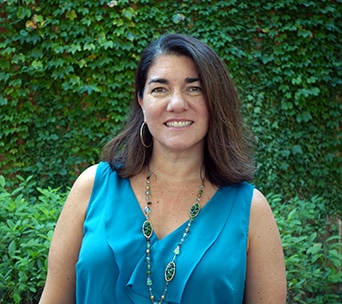
Jake Jackson-Wolf, LCPC & Elizabeth Nutt Williams, Ph.D.
April 16, 2025

Master’s-level psychotherapists have been receiving degrees and practicing psychotherapy for many years. As most are aware, there are different types of training programs at the master’s level. Importantly, some of those training programs are explicitly grounded in psychology. For example, programs in Counseling Psychology often offer both master’s and doctoral training, and there are some stand-alone master’s training programs in counseling and clinical psychology. Although some training programs do not have an explicit grounding in psychology, this article focuses on the future of those practitioners whose master’s training is grounded in and associated with psychology. In particular, as the American Psychological Association (APA) begins to recognize and include individuals who have received master’s-level training in psychology programs, we wanted to explore our history as well as our future, understanding that there are still many misconceptions about training and practice differences to address.
The authors of this article feel uniquely situated by virtue of their relationship, positions, and experiences to speak about the role that psychology as a discipline, and Division 29 specifically, should take in shaping the future of psychology training in psychotherapy with regard to education, and practice. The authors met at St. Mary’s College of Maryland, the National Public Honors College, where Libby has been a professor of psychology for many years. Jake took classes with and was mentored by Libby in the completion of his senior thesis. The two later worked together on presenting Jake’s research at the North American Society for Psychotherapy Research conference in 2016 and later publishing it in the journal Sex Roles in 2018. Further, they presented work on feminist mentorship of undergraduate research at the Association of Women in Psychology conference in 2018. Jake feels his undergraduate education in psychology led him to his master’s program in Counseling and Human Services at Lehigh University, a program also grounded in psychology and taught by psychologists.
Libby, one of Division 29’s current representatives to the APA Council, has served in a variety of positions on the Board of Directors of Division 29 since 2005, including serving as president in 2011. Libby continues to work as a psychotherapy researcher and professor of psychology at St. Mary’s where she trains undergraduate students in the scientist-practitioner model with a grounding in psychological science before they move on to graduate school. Jake joined the division in 2016 as the student representative to the professional practice standing committee and has continued to serve the committee, including serving as the committee chair in 2022. Jake is a licensed clinical professional counselor in the state of Maryland and owns a private group practice where he specializes in working with individuals and couples on issues related to sexuality, trauma, and relationships. Jake employs professional counselors, clinical social workers, and a clinical psychologist. We believe our perspectives on the issue of master’s training in psychology is informed by our educational histories as well as our work within Division 29.
History of Challenges Faced by Master’s Level Psychotherapists Within APA
Master’s-level psychotherapists have been presented with structural barriers in accessing APA and its resources. This separation was by design as the official position of APA has been that the doctoral degree is the entry level education for a psychologist (and, by extension, psychotherapist). As such, challenges master’s-level practitioners experience with participation in the profession of psychology primarily relate to professional identity, logistical issues involving membership, and the recognition of expertise.
By way of definition, throughout this article, our reference to master’s-level or master’s trained psychotherapists are referring to graduates of psychology-based programs usually in the areas of counseling and clinical psychology that are intended to train psychotherapists to practice psychotherapy. We seek to differentiate this from degrees that are earned enroute to a doctoral degree or those not rooted in psychology.
Professional identity for many individuals who were trained in psychology, by psychologists, who later become master’s-level professional counselors can be quite confusing. Students who obtain their degrees in master’s programs that are based in psychological science and train practitioners to provide psychotherapy often find they must seek professional homes outside of psychology. Many graduates from these psychology-based programs end up losing a sense of a professional home and identity because they do not feel familiar with the American Counseling Association but have also not been permitted to join APA or its divisions at levels that allow full participation.
Those without doctoral degrees have been excluded in the past from full APA and division membership, including the ability to vote in elections and eligibility to hold elected office. This situation is problematic because APA and Division 29 should be focused on the professional and political issues affecting the practice of psychotherapy … the practice of all psychotherapy. Systematic exclusion of different categories of professionals who are independent practitioners of psychotherapy creates a type of ‘taxation without representation’ that allows for participation without a say in the future of the field.
The current structural inequities do not seem to be in the best interest of practitioners or the public, particularly as there is a national shortage of available therapists (APA Monitor, January 2024).
Recent Changes at the APA and in Division 29 for Master’s Level Psychotherapists
Beginning in 2017, the Council of Representatives of the APA approved accreditation of master’s programs in psychology. The first policy was approved in February 2021, and the APA Commission on Accreditation (CoA) accredited its first master’s degree program in psychology in 2024. In addition, master’s level practitioners can now join APA as APA Associate Members. For several years, various groups within APA have been working on issues related to creating a more unified framework for health service psychology that is inclusive of both master’s and doctoral education and practice. For the first time in many years, there has been a push to recognize the need for standardization of competencies within health service psychology, particularly as it pertains to the practice of psychotherapy.
To that end, several task forces within APA began working on competency documents. The Board of Professional Affairs (BPA) then submitted a combined document (A Competency Framework for Master’s and Doctoral Degree Education and Training in Health Service Psychology) to the APA Council. This framework was intended to create aspirational competencies for education and training that master’s and doctoral graduates should demonstrate upon successful completion of training programs. This approach is a positive step in the direction of continuing to be responsive to the needs of the variety of professionals who practice psychotherapy.
Historically, there has been a gap in addressing the identity and professional standards for those with doctoral and with master’s degrees who were trained by psychologists or in psychology programs. A task force from Division 29 put forward a critique of the proposed Competencies framework, positing that it missed the mark in several ways.
The proposed Competencies framework that APA put forward last fall was ultimately voted down by the Council of Representatives, in part due to the critiques leveraged during the public comment period including the concerns Division 29 put forward. Division 29’s critique did highlight some positive elements of the framework. The Division was supportive of the overall structure that sought to create a set of core competencies which define how master’s and doctoral students should be ready to engage in the provision of health service psychology work upon their graduation. They levied praise for this model of identifying the multi-level nature of the profession with a shared set of competencies rather than wholly distinct competencies based on the educational level.
The primary critiques put forward by the Division were:
- Differentiations of the competencies related to EDI (Equity, diversity and inclusion), it feels inconsistent with the mission, vision, values of psychology to suggest that practitioners would have different levels of responsibility or skill sets to engage in this work which is fundamental to the ethical provision of psychological services.
- Language surrounding the ways that practitioners would adhere to ethical, relational, and intervention protocols. Artificial distinctions were made that did not appear to be representative of differences in training or education. Such arbitrary distinctions conflate educational attainment with ability to, for example, engage with ethical decision-making models.
- The model should be re-worked to emphasize the unique goals and educational aims of the different levels of education rather than focusing on arbitrary distinctions based on the time it takes to complete either training experience.
Division 29 joined other divisions (such as Division 17, the Society of Counseling Psychology) to reiterate the need for a strong competencies document but to prevent the heavily critiqued document that was before Council from becoming APA policy.
Finally, as previously noted, the APA Council approved the accreditation of master’s programs in psychology in 2021. In addition to the work on the Competencies document, groups are also actively working on title and scope documents and a revision to the APA Model Licensure Act. The goal is to fully involve psychology-trained professionals, particularly within Health Service Psychology, in APA, acknowledging the role of both master’s and doctoral trained professionals within the profession.
Recent Changes in Division 29 for Masters-level Therapists
Master’s-level practitioners can directly join Division 29, The Society for the Advancement of Psychotherapy, as non-APA Member Affiliates (individuals who are not members of APA at large, but join the division as an affiliate), but they currently cannot vote in divisional issues. Division 29 has recently made efforts to change its voting policies. In a proposed Bylaws change, the Division 29 Board voted in February 2025 to approve non-APA Division 29 members having voting privileges in the Society; however, bylaws changes are not confirmed until approved by the membership. Division 29 leadership is also considering changes to whether non-APA Member Affiliates in the division may run for and hold office in the Society (other than the position of Council Representative, as these individuals must be APA members). No determination had been made about this issue at the time of publication of this article. It should be noted that the authors of this article, the Professional Practice Committee, and many others throughout the division are in support of all full members of Division 29, regardless of APA affiliation or degree status, being eligible to hold office and vote in the division.
Division 29 has also long recognized the value of diverse voices by including affiliate members in a variety of ways, such as by writing articles for the Bulletin, being members of committees, and being chairs of committees. For example, student and early career members of the division have long been encouraged to write for the Bulletin as a way to share their research and experiences with the membership and beyond. Further, in 2022 after six years in the division, Jake was nominated by the professional practice committee and the president of the division to serve as chair of the professional practice standing committee. Surely there are other examples of affiliate members and non-psychologists serving within the division that have not been identified by the authors of this article.
How Division 29 Can Provide Continued Leadership in this Arena
Psychotherapy is a multidisciplinary endeavor with providers ranging in background, training experiences, practice settings, and educational experiences. Division 29 is the premier organization representing the interests of psychotherapy researchers, practitioners, educators, and advocates. As such, we are uniquely situated to serve as leaders in the development of a more inclusive, practical, and accessible future as it relates to the needs of psychotherapists, specifically those practicing at the master’s level. Division 29 has the opportunity to remain an influential voice in the future of psychotherapy by adapting and expanding its views on the role of master’s-level psychotherapists.
We suggest that Division 29 can provide additional leadership in the following areas:
-Provide guidance and leadership on the role of master’s-level practitioners and training programs within APA, state psychological associations, and state licensing boards.
-Be leaders in the conversation on inclusion of master’s-level practitioners within the Division and APA more broadly by allowing full membership to the division (inclusive of voting rights and the ability to hold elected office) for master’s level psychotherapists.
-Participate in the development of a new model establishing competencies for master’s and doctoral training that creates meaningful distinctions between the education levels as it pertains to psychotherapy, psychological testing and assessment, specific intervention areas (trauma therapy, neuropsychology, forensic psychology, etc.), research, education, and advocacy.
-Actively work to disseminate information about masters-level therapists in APA and debunk misconceptions that may be present.
Conclusions
We decided to write this article because we believe that there is more we can do as an organization to be inclusive and to enhance our profession. It is our hope that in doing so we can strengthen the bonds between master’s and doctoral level professionals and, importantly, help provide more benefits of psychotherapy to the public at large. At a personal level, we have seen how grounding in psychological science, training in the scientist-practitioner model, and genuine collegiality is not only possible but also immensely rewarding, regardless of whether one holds a master’s or doctoral degree.
The professional practice committee will continue to write articles for the Bulletin providing information and updates regarding the role of master’s-level therapists in APA and Division 29. In addition to correspondence with the authors, we are also inviting you to email Amy Ellis (amyellisphd@gmail.com) and Marcy Rowland (marcykrowland@gmail.com) with thoughts, questions, or comments as we plan to write articles answering questions and clarifying any misinformation.
We hope we have provided some food for thought and invite you to share your views with us and with the Division 29 leadership.
Tags
About the Authors
Jake Jackson-Wolf, LCPC
Jake Jackson-Wolf, LCPC is the owner and a practicing therapist at B'well Counseling Services, a group practice in Towson, MD. Jake has been a member of the professional practice committee since joining as student member in 2016 and served as chair of the committee in 2022. His work focuses primarily on couples, relationship difficulties, sexual concerns, and trauma. He advises therapists on business and practice matters as well through his consulting arm of the practice, "The Sustainable Practice, by B'well."
Elizabeth Nutt Williams, Ph.D.
Elizabeth Nutt Williams is a Professor of Psychology at St. Mary’s College of Maryland, The National Public Honors College, where she has served as Chair of the Psychology Department, Faculty Senate President, and Dean of the Core Curriculum. She received her bachelor’s degree in psychology from Stanford University and her doctorate in Counseling Psychology from the University of Maryland. She is a Fellow of the American Psychological Association (APA) (Divisions 2, 17, 29, and 35) and has served in multiple governance roles for the Society for the Advancement of Psychotherapy (Division 29), including as president of the Division in 2011 and as Council Representative currently and from 2017 to 2019. Dr. Williams is a psychotherapy researcher who focuses on process research, feminist multicultural approaches, and qualitative and mixed method designs. She received the Jack D. Krasner Early Career Award from Division 29 and the Outstanding Early Career Achievement Award from the Society for Psychotherapy Research in 2006 and the Norton T. Dodge Award for Scholarly and Creative Achievement from St. Mary’s College of Maryland in 2021. Dr. Williams has also served on several editorial boards, including Division 29's Psychotherapy.
Citation
References
No references.
Comments
Be the first to share your thoughts.
Leave a comment
Your email address will not be published. Comments are reviewed before they appear.