
Assessment & Treatment
Focused on the critical aspects of assessment and treatment in psychotherapy, this section offers resources, guidelines, and discussions on effective diagnostic and therapeutic strategies to improve client outcomes.
280 articles found

Psychodynamic Case Consultation
Watch the Recording Here Psychodynamic Case Consultation with Jon Frederickson, MSW from Internet Editor on Vimeo. Information about the Webinar In the case consultation, we will discuss problem cases where therapists are feeling stuck in the work. We will work together to find out which patient behaviors are blocking therapeutic progress and then suggest strategies […]

Jon Frederickson, M.S.W.
May 4, 2015
Ethical Considerations When a Client Crosses Sexual Boundaries
I’ll never forget the day that a friend of mine quoted a professor from my university: “The only way you can screw up as a psychologist is by having sex with your clients. As long as you don’t do that, you’re set!” Forgive the crass language, but the words and tone used at the time […]

Ashley Herbst, M.S.
April 30, 2015

Reflections on Mental Health Professionals Working with Divorcing Parents Outside the Courtroom
Divorce is major event in the life cycle of the nuclear family. It has the potential to be traumatic and, in some circles, is even referred to as, “The death of the family.” Families torn apart, and parents (with their attorneys) as adversaries, are common to this process that is often described as a “war”. This tends to […]

Jeffrey Zimmerman, Ph.D., ABPP
April 12, 2015

Transporting Evidence-Based Practices to Public Health Settings
We live in an age when a multitude of effective therapies have been identified, and the call is building for evidence-based practices as “the integration of the best available research with clinical expertise in the context of patient characteristics, culture, and preferences” (American Psychological Association, 2006, p. 273). This focus has accompanied a proliferation of […]

Scott H. Waltman, Psy.D., ABPP + 2 more
March 8, 2015

What Do We Know about Psychotherapy?
We have just finished writing the 2nd edition of a book with the title The Great Psychotherapy Debate. Although there are many aspects of psychotherapy about which there is no debate, there remain some important debates about some issues. Interestingly, what we debate probably is not all that important, at one level (although it is […]

Bruce E. Wampold, Ph.D., ABPP + 1 more
March 1, 2015

Preparation for Psychotherapy Through Facilitating Autonomous Motivation
Our study published in Psychotherapy in December 2014 focused on psychotherapy motivation among patients with substance use disorders (SUD) based on Self Determination Theory (SDT; Ryan & Deci, 2000). The study showed that SUD patients’ amotivation predicted increased dropout rate in the step from assessment to starting therapy (Philips & Wennberg, 2014). These results add […]

Björn Philips + 1 more
February 15, 2015
Divorce and Alternative Dispute Resolution
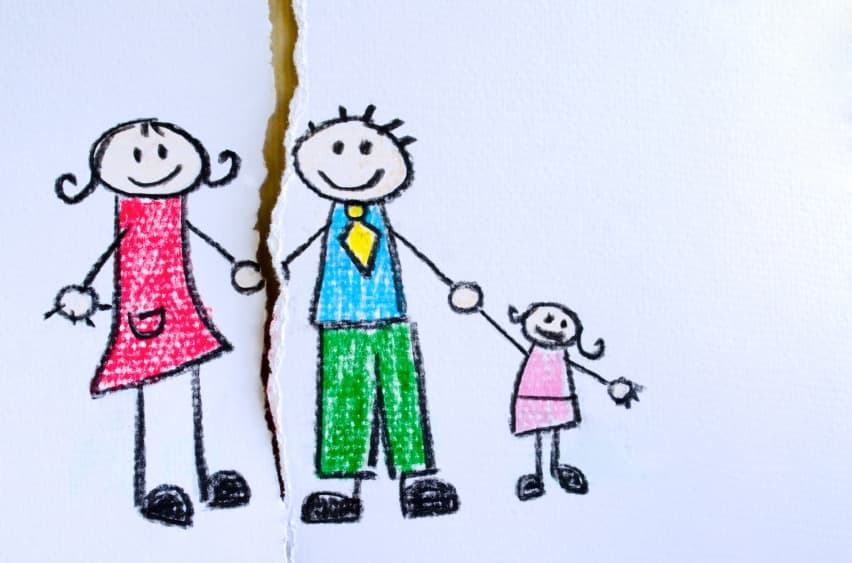
Psychotherapists are often called on to help families of divorce. It can be to help a couple peacefully disentangle their relationship or help a child cope with the changes in the family. While the courts try to help children and families of divorce, they are limited by statute, the utility of custody evaluations, and the […]
Jeffrey Zimmerman, Ph.D., ABPP
January 18, 2015

Creating Meaning in Treatment
Although not popular or necessarily the easiest tool to utilize, the significant events approach to change process research, as described by Elliot (2010), can provide explanations and causal evidence that other approaches (e.g. process-outcome) may not. Within the significant events approach literature, specific moments within psychotherapy treatment have been identified and analyzed to tie in-session […]

April Krowel, Ph.D.
January 15, 2015

10 Ways to Improve Psychotherapy Outcome
In Laska, Gurman, & Wampold (2014) and Laska & Wampold (2014) I discussed how to improve the quality of mental health care from a common factor (CF) perspective. Unfortunately, one fundamental misunderstanding of CF theory is that “anything goes” and therapists can do whatever they want. Let me be crystal clear, from a CF perspective, […]

Kevin M. Laska, Ph.D.
January 4, 2015

Program-Led Guided Self-Help Interventions
Introduction In the June issue of Psychotherapy, Newman, Przeworski, Consoli, and Taylor present a study on the use of a palmtop computer-assisted therapy for Generalized Anxiety Disorder (GAD) (Newman et al., 2014). This novel evaluation of the efficiency of coupling a computer program with face-to-face Cognitive-Behavioral Therapy (CBT) was the culmination of questions that began […]

Nitya Kanuri, B.A. + 2 more
December 18, 2014

Functional Analytic Psychotherapy (FAP)
Close relationships are central to mental health (Wetterneck & Hart, 2012). Loneliness and poor social connection represent a significant public health concern, increasing risk of death as much as excessive cigarette smoking, more than excessive drinking and obesity (Holt-Lunstad et. al., 2010). Functional Analytic Psychotherapy (FAP) is a contextual, behavioral, relational approach to psychotherapy in […]

Mavis Tsai, Ph.D. + 3 more
December 14, 2014

An Exciting Future by Embracing Change
The Centers for Disease Control and Prevention (CDC) One of the most vibrant agencies within the Department of Health and Human Services (HHS) is CDC, headquartered in Atlanta, Georgia. Since 1946, CDC has served as a public health leader in the U.S. and around the world. It has experts assigned to all 50 states and […]

Pat DeLeon, Ph.D.
December 11, 2014