
From Data to Intervention: Four International Case Studies of Practice-Research Networks in Mental Health



 +2
+2Stewart E. Cooper, Ph.D., ABPP & 5 others
September 10, 2025

Abstract
The gap between psychotherapy research and clinical practice remains a significant challenge, hindering the translation of evidence into real-world settings and the generation of practice-based evidence. Practice-research networks (PRN) have emerged as a powerful collaborative model to bridge this divide. This paper presents and synthesizes insights from four distinct international PRNs to illustrate their versatility, benefits, and operational models in advancing mental healthcare. We provide a descriptive review of four case studies that were presented at the 2025 Society for Psychotherapy Research Conference. The case studies reveal that while PRNs share a common goal of integrating science and practice, their structure and primary focus are responsive to context and may vary significantly. PRNs represent a vital and adaptable framework for the future of psychotherapy research and innovation. By fostering collaboration between clinicians, researchers, and patients, these networks are uniquely positioned to improve clinical outcomes, support continuous quality improvement, and create learning health systems that are responsive to the needs of diverse populations.
Introduction
For decades, a persistent gap has existed between the worlds of psychotherapy research and clinical practice (Castonguay et al., 2013). Research conducted in highly controlled academic settings often struggle for relevance and applicability in the complex reality of day-to-day clinical work. Conversely, the valuable data and clinical wisdom generated in practice have historically been difficult to systematically collect, analyze, and disseminate (Kazdin, 2008; Margison et al., 2000). This disconnect hinders the development of a truly evidence-based and evidence-generating mental healthcare system.
Practice-research networks (PRN) have emerged as a powerful solution to this challenge. PRNs are formal collaborations between practicing clinicians and academic researchers that is built on a foundation of mutual respect and shared goals (Boswell et al., 2015). By implementing routine outcome monitoring (ROM) and pooling data from real-world clinical settings, PRNs create an infrastructure that serves both practice and research. For practitioners, PRNs provide tools for quality improvement, benchmarking, and immediate clinical feedback. For researchers, they give access to naturalistic datasets that enhance the ecological validity of their findings. Ultimately, these networks foster a learning organization (Senge, 2006) where practice informs research and research, in turn, enhances practice. The benefits of PRNs are manifold, including enhancing real-world relevance, improving clinical outcomes, empowering clinicians as researchers, and informing policy and funding decisions (Bower et al., 2012). However, there is no single blueprint for a successful PRN. Their structure, scale, and primary objectives can vary dramatically based on the specific context, available resources, and goals of the stakeholders.
In this paper, we present four distinct case studies of productive PRNs from the United States, the United Kingdom, and Norway. Each case study was originally presented as part of a panel at the 2025 Society for Psychotherapy Research Conference and illustrates a different model of PRN functioning. By comparing and contrasting these international examples, we aim to provide a comprehensive overview of the current landscape of PRNs and highlight the diverse ways they are driving innovation in mental healthcare.
Four International Case Studies of Practice-Research Networks
The following case studies demonstrate the implementation and operation of practice-research networks. Additional information regarding this research is provided by Locke and colleagues (2012) and is discussed further throughout the following four case studies.
Case Study 1: The Center for Collegiate Mental Health (CCMH) – A Model of Large-Scale Data Aggregation
The Center for Collegiate Mental Health (CCMH) based out of Penn State University in the United States represents a mature, large-scale model of a PRN. CCMH was developed over several years (2003-2010) through a grassroots college counseling center initiative. Its mission is to bridge the gap between science and practice in college student mental health by providing accurate data to stakeholders to improve client care. Since it was formally launched in 2010, CCMH has grown into an international network of over 860 University Counseling Centers (UCC).
CCMH’s success is built on a robust, grassroots-developed infrastructure. It provides UCCs with a standardized dataset for intake paperwork and a routine outcome measure called the Counseling Center Assessment of Psychological Symptoms (CCAPS). This data—spanning client identity, history, context, and symptoms—is uploaded from member centers’ electronic health records (EHR) to a central, de-identified repository. This creates a powerful data flow and access to crucial information that incorporates the following:
- Data sources: Client self-reports, clinician reports, and administrative data.
- Contributions: Data from approximately 170,000 new clients and 5,000 therapists each year.
Products: Localized reports for member centers, measure development, clinical trainings, and numerous peer-reviewed research publications.
A representative CCMH study by Trusty et al. (2024) illustrates the network’s impact. Using data from 16,197 clients at 85 UCCs, the study examined the link between psychotherapy dose, clinical outcome, and academic withdrawal. Structural equation modeling revealed that a higher number and frequency of therapy sessions predicted greater reductions in psychological distress. In turn, these improved clinical outcomes predicted a lower likelihood of the student withdrawing from the university. This finding provides crucial, practice-based evidence that UCCs can use to advocate for resources, demonstrating that an adequate therapeutic dose not only improves mental health but also supports the university’s core mission of student retention.
Case Study 2: The SCORE Consortium – Building a National Evidence Base from the Ground Up
The Student Counselling Outcomes Research and Evaluation (SCORE; see https://score-consortium.sites.sheffield.ac.uk/home) Consortium in the United Kingdom (UK) exemplifies a bottom-up approach to building a PRN. It was formed in response to a recognized need to develop a robust evidence base for student mental health services in the context of increased demand and inconsistent data collection practices. SCORE is a practice-research group that unites university counseling services, professional bodies, and researchers. Its core activity has been to pool routine service data from its member institutions (see Broglia et al., 2021; Newcombe et al., 2024; Scruggs et al., 2023). A key challenge was that services used different outcome measures and data systems. A major part of SCORE’s work has, therefore, involved creating data recoding guides, identifying data gaps, and consulting with the sector to develop a national minimum dataset to improve data standards and facilitate meaningful cross-institutional analysis (see O’Donnell et al., 2024).
Through this collaborative effort, SCORE has produced vital research to inform practice and policy. For instance, early work profiled student mental health and counseling effectiveness across four UK services, providing foundational data for the sector (Broglia et al., 2021). More recent studies have examined the impact of the COVID-19 pandemic on service delivery, including the pivot to online therapy, and explored the relationship between psychological distress and academic outcomes. The work of SCORE demonstrates how a PRN can be instrumental in creating an evidence base where one is lacking, fostering a culture of evaluation and data-informed practice across an entire sector.
See: https://score-consortium.sites.sheffield.ac.uk/home
Case Study 3: Norse Impact – A PRN for Developing and Testing Digital Adjunct Interventions
The Norse Impact Program based in Norway showcases a forward-looking PRN model focused on using data collected from the Norse Feedback PRN (Nordberg et al., 2021) to create and test novel interventions. In one case application, it operates within the Helse Vest PRN, which serves a population of 1.1 million people and collects approximately 10,000 personalized, multi-dimensional Norse Feedback self-reports monthly. A foundational question for the PRN is how to use ROM toward additional client usefulness, beyond the already established benefits of clinical feedback on outcomes when integrated within psychotherapy processes (Moltu et al., 2018).
Norse Impact’s core hypothesis is that enhancing a patient’s health competency (their ability to understand, access, and apply mental health information and resources) outside the therapeutic encounter can increase the effectiveness of psychotherapy. The project moves beyond passive data collection to active intervention. The goal is to use the vast repository of ROM and outcomes data to develop machine learning and artificial intelligence (AI) algorithms that can:
- Predict outcomes, such as treatment dropout.
- Match patients to personalized, digital, adjunct resources (e.g., psychoeducational videos, self-monitoring visuals, evidence-based exercises) delivered to their mobile devices between sessions.
By using machine learning and large training sets to analyze patterns in self-report data, Norse Impact aims to identify patients’ specific treatment needs and match these with available digital adjunctive treatment resources. These digital resources will be automatically delivered, for example, to strengthen the therapeutic alliance, increase insight or control, or to provide coping skills. Norse Impact represents a shift from using data for retrospective analysis to using it for real-time, personalized, and scalable patient support. This case aims to illustrate how PRNs can serve as innovation incubators, leveraging cutting-edge technology to augment traditional psychotherapy and empower patients.
Case Study 4: University of Oslo – Using a PRN Framework to Test Clinical Theory
The final case study (Høstmælingen et al., 2025) from the Norwegian Multi-Site Project for Studies of Process and Outcome in Psychotherapy (NMSPOP) at the University of Oslo highlights how the principles of practice-oriented research, which are foundational to PRNs, can be used to investigate core theoretical questions in psychotherapy. This work exemplifies a deep dive into a specific clinical mechanism within a naturalistic setting.
NMSPOP is a PRN collaboration between the universities of Oslo, Bergen, and Trondheim and eight sites comprising 15 Norwegian mental health outpatient clinics providing routine mental health services. A key motivation for the PRN was to provide insight into processes and outcomes from psychotherapy in a naturalistic treatment setting within the regular Norwegian health care system. Treatment was not manualized or restricted to a certain number of sessions, and data were collected from 1995 to 2008 from a highly distressed sample with a range of mental health problems. Data collection was intensive and conducted regularly through treatment, at 6-month, 1-year, and 2.5-year follow-ups.
This study addressed a long-standing question in depression treatment: does improvement in depressive symptoms lead to better interpersonal functioning, or does improvement in interpersonal problems drive the reduction of depressive symptoms? To investigate this, researchers followed 178 depressed patients receiving open-ended, non-manualized psychotherapy. They collected data on depressive symptoms and interpersonal problems at nine time points before, during, and after treatment (up to a 2.5 years). Using latent curve modeling with structured residuals, they analyzed the reciprocal, time-lagged influences between these two domains (Høstmælingen et al., 2025).
The results indicated that while the two are related, improvement in interpersonal problems was a stronger and more consistent predictor of subsequent improvement in depressive symptoms over time. This finding lends support to theories suggesting that interpersonal functioning is a core driving force in depression. For clinicians, this practice-based evidence suggests that specifically assessing and addressing patients’ interpersonal distress, not just their depressive symptoms, may be crucial for achieving lasting change (Høstmælingen et al., 2025). This study is a powerful example of how naturalistic data, collected systematically within a PRN framework, can be used to refine clinical theory and guide therapeutic practice.
Discussion: Synthesizing the Models
These four case studies, while all rooted in the PRN philosophy, present a spectrum of models for bridging the research-practice gap (Table 1).
Table 1. Comparison of Four International Practice-Research Network Models
| Dimension | CCMH (USA) | SCORE (UK) | Norse Impact (Norway) | NMSPOP (Norway) |
| Primary Goal | Large-scale data aggregation, benchmarking, and quality improvement. | Building a national evidence base; establishing data standards. | Developing and testing data-driven digital adjunct interventions. | Testing specific clinical theory in a naturalistic setting. |
| Scale | Very large international network (>800 centers, >170k clients/year). | National consortium of universities and professional bodies. | Large regional health network (1.1M population). | Single multi-site research study (N=178). |
| Key Innovation | Standardized data infrastructure integrated with EHRs. | Pooling and standardizing disparate data from multiple sources. | Using AI/ML to match patients with personalized digital support. | Application of advanced statistical modeling to naturalistic data. |
| Example Outcome | Evidence linking therapy dose to student retention. | Data on COVID impact; minimum data standard for the UK sector. | A predictive model to deliver personalized psychoeducation. | Evidence that improving interpersonal function reduces depression. |
Common Threads, Barriers, and Facilitators of Success
Despite their differences, several common themes emerged from these case studies. First, all four models rely on the systematic collection of routine outcome data as their foundation. Second, they are all built on collaboration, recognizing that the expertise of both clinicians and researchers is essential. Third, they share a commitment to producing practice-based evidence that is relevant and useful for real-world care.
The divergence lies in their primary application of this data. CCMH excels at descriptive power and benchmarking, answering “What is happening?” on a massive scale. SCORE demonstrates the power of a PRN in system building, creating order and shared standards where they were absent. Norse Impact points to the future, using a PRN as an engine for technological innovation and intervention development. Finally, the University of Oslo study shows how a PRN framework can provide a definitive answer to a fundamental theoretical question.
The collective experience of these networks also sheds light on critical facilitators and barriers.
- Facilitators: A shared vision, strong leadership, a “clinical-first” focus that provides tangible benefits to practitioners, and a robust data infrastructure are crucial. The grassroots development of CCMH and the practitioner-driven impetus of SCORE highlight the importance of clinician buy-in.
- Barriers: Challenges often include securing sustainable funding, navigating data privacy and ethics regulations, standardizing data across different systems, and managing the technical complexities of EHR integration.
Conclusion and Future Directions
Practice-research network are not a monolithic concept but a flexible and powerful framework for advancing mental healthcare. As demonstrated by these four international case studies, PRNs can be adapted to serve a multitude of functions, from establishing a foundational evidence base to testing advanced AI-driven interventions.
The future of PRNs is bright and points towards greater integration and innovation. We see a trend towards more international collaboration, such as a new partnership between SCORE and CCMH to develop a new Student Experience and Academic Adjustment Measure (SEAM-10). The work of Norse Impact signals a significant move towards using PRN data not just to observe, but to actively and personally intervene.
By bringing researchers and clinicians together, PRNs break down old silos and create a virtuous cycle of inquiry and improvement. They ensure that research is grounded in the realities of practice and that practice is continually informed by the latest evidence. For any stakeholder committed to improving mental health outcomes, supporting, joining, or building a practice-research network is one of the most impactful investments we can make.
Tags
About the Authors
Stewart E. Cooper, Ph.D., ABPP
My diverse professional background in psychotherapy practice, education, supervision, and research have worked synergistically with each element enhancing the others. For many years, I served as the Director of Counseling Services (which eventually included a Counseling Center plus separate Substance Abuse, Sexual Assault and Suicide Prevention units) at Valparaiso University in NW Indiana. During this time, I was also a faculty member in the Department of Psychology teaching in their accredited master’s mental health counseling program where I served two stints as its Program Chair. Based on my teaching, service, and scholarship, I was promoted to Full Professor. I have authored/edited 5 books, 10 book chapters, and 100 refereed journal articles. Within APA Governance, I have served as the Chair of the Board of Professional Affairs, Chair of the Membership Board, a member of its Policy and Planning Board and as co-creator and member of its Committee for the Advancement of General Applied Psychology. I also served two terms on its Council of Representatives and was an At-Large Member of the APA Board of Directors. Additionally, I was President of the Society for Consulting Psychology (APA Division 13) and am President-Elect for the Society for the Advancement of Psychotherapy (APA Division 29). Licensed as a HSPP in Arizona and in Indiana with Board Certification in both Counseling and Organizational Psychology, I am currently expanding Life Enrichment Associates, a solo clinical and consultation practice which I developed in 1982.
Wilson T. Trusty, Ph.D
Wilson Trusty, Ph.D. (he/him) is a Research Psychologist at the Center for Collegiate Mental Health (CCMH) and a Senior Staff Psychologist at Penn State University’s student counseling center. He received his Ph.D. in Clinical Psychology from Idaho State University. Wilson's research focuses on psychotherapy process and outcome, college student mental health, and intersections of college counseling center services with student academic success. His clinical specialty is trauma-informed care, and he also owns a solo private practice focused on adult Autism assessment.
Emma Broglia, PhD
Dr. Emma Broglia is a Lecturer in Psychology at The University of Sheffield, where she researches how to make mental health support for students both effective and responsive. Her collaborative approach involves co-production with students, practitioners, and services, and includes long-standing partnerships with professional bodies including the British Association for Counselling and Psychotherapy (BACP). Through these collaborations, she aims to contribute to a clear evidence base for student needs and measure the outcomes of psychological therapies. This work informs all her research ranging from developing and validating measures to managing a practice-research network using naturalistic data to enhance university support services (see SCORE). She is also the Associate Editor for the Cogent Mental Health Journal where she oversees manuscripts concerning college student mental health and psychotherapy research.
Christian Moltu, PhD
Christian Moltu, Ph.D., is a Norwegian clinical psychologist, professor of clinical psychology at the Western Norway University of Applied Sciences, and research director at the Division of Mental Health Care, Førde Hospital Trust. With a PhD from the University of Bergen focused on interpersonal processes in psychotherapy, his research explores clinical feedback systems, recovery, and microprocesses in therapeutic change. Christian is a co-founder of Norse Feedback, a digital clinical tool for person-centered feedback, now used internationally. He leads the research group PERSONFORSK and has received several national awards for innovation, quality, collaboration, and scientific publication.

Andreas Høstmælingen, PhD
Andreas Høstmælingen, Ph.D., is a Norwegian clinical psychologist, director of research at the Norwegian Center for Child Behavioral Development, and a researcher at the Department of Psychology, University of Oslo, Norway. His research spans a variety of subject areas including evidence based practice for vulnerable children and youth, psychotherapy process and outcome for adults, depression treatment , and justice involved youth.
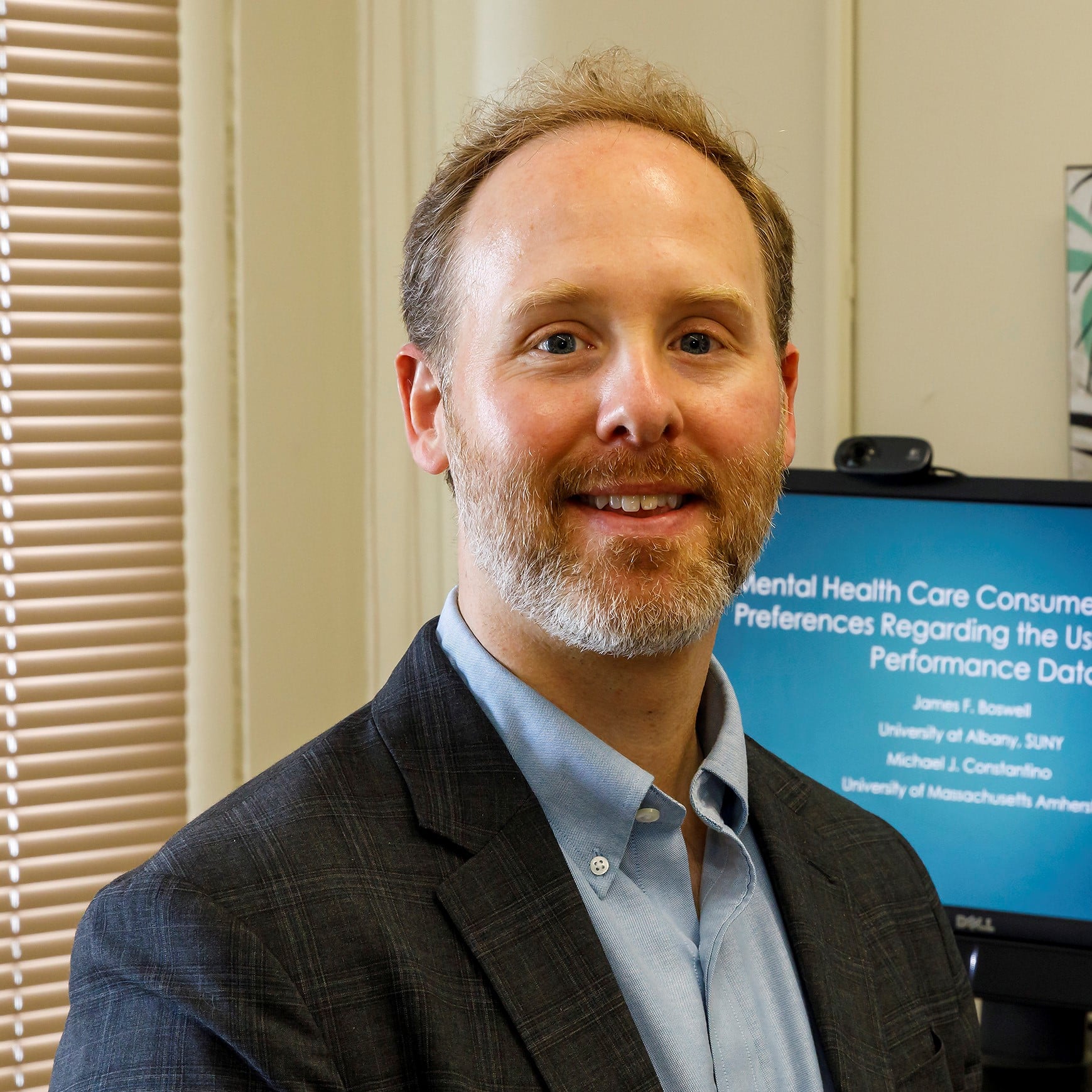
James F. Boswell, Ph.D.
James F. Boswell, Ph.D, is an Associate Professor and Director of Clinical Training in the clinical psychology program at the University at Albany, SUNY. He is also an associate of the Center for the Elimination of Health Disparities and is Past-President of the North American Society for Psychotherapy Research. Dr. Boswell conducts practice-oriented research on the process and outcomes of psychological interventions, as well as the integration of science and practice, including measurement-based care.
Citation
References
Boswell, J. F., Kraus, D. R., Miller, S. D., & Lambert, M. J. (2015). Implementing routine outcome monitoring in clinical practice: Benefits, challenges, and solutions. Psychotherapy, 52(4), 412-421. https://doi.org/10.1037/pst0000031
Bower, P., King, M., Nazareth, I., Lampe, F., & Sibbald, B. (2012). Patient and public involvement in primary care research: A review of PRN models. Primary Health Care Research & Development, 13(1), 1-8. https://doi.org/10.1017/S1463423611000331
Broglia, E., Ryan, G., Williams, C., Fudge, M., Knowles, L., & Turner, A. (2021). Profiling student mental health and counselling effectiveness: Lessons from four UK services using complete data and different outcome measures. British Journal of Guidance & Counselling, 51(1), 204-222. https://doi.org/10.1080/03069885.2020.1860191
Castonguay, L. G., Barkham, M., Lutz, W., & McAleavey, A. A. (2013). Practice-oriented research: Approaches and applications. Psychotherapy, 50(4), 381-390. https://doi.org/10.1037/a0033810
Høstmælingen, A., Nissen-Lie, H. A., Monsen, J. T., & Solbakken, O. A. (2025). Interrelationships of symptomatic and relational distress: Improvements in interpersonal problems predict subsequent improvement in depressive symptoms during open-ended psychotherapy for adults with depression. Journal of Consulting and Clinical Psychology, 93(6), 457–470. https://doi.org/10.
Kazdin, A. E. (2008). Evidence-based treatment and practice: New opportunities to bridge clinical research and practice, enhance the knowledge base, and improve patient care. American Psychologist, 63, 146-159. https://doi.org/10.1037/0003-066x.63.3.146
Locke, B. D., Bieschke, K. J., Castonguay, L. G., & Hayes, J. A. (2012). The center for collegiate mental health: Studying college student mental health through an innovative research infrastructure that brings science and practice together. Harvard Review of Psychiatry, 20(4), 233-245. https://doi.org/10.3109/10673229.2012.712837
Margison, F. R., Barkham, M., Evans, C., McGrath, G., Mellor-Clark, J., Audin, K., & Connell, J. (2000). Measurement and psychotherapy: Evidence-based practice and practice-based evidence. The British Journal of Psychiatry, 177(2), 123-130. https://doi.org/10.1192/bjp.177.2.123
Moltu, C., Veseth, M., Stefansen, J., Nøtnes, J. C., Skjølberg, Å., Binder, P. E., & Nordberg, S. S. (2018). This is what I need a clinical feedback system to do for me: A qualitative inquiry into therapists’ and patients’ perspectives. Psychotherapy Research, 28(2), 250-263. https://doi.org/10.1080/10503307.2016.1189619
Newcombe, C., Broglia, E., & Wright, C. (2024). Comparison of outcomes from a university counselling service before and during COVID‐19: Exploring the use of remote therapy. Counselling & Psychotherapy Research, 25(1). https://doi.org/10.1002/capr.12821
Nordberg, S. S., McAleavey, A. A., & Moltu, C. (2021). Continuous quality improvement in measure development: Lessons from building a novel clinical feedback system. Quality of Life Research, 30, 1-12. https://doi.org/10.1007/s11136-021-02893-0
O'Donnell, J., Broglia, E., Turner, A., Fudge, M., Knowles, L., Barkham, M., & SCORE Consortium. (2024). Developing a minimum data standard for student mental health services in the UK: A qualitative study with staff from university support services. Counselling & Psychotherapy Research, 24(4), 1454-1465. https://doi.org/10.1002/capr.12787
Scruggs, R., Broglia, E., Barkham, M., & Duncan, C. (2023). The impact of psychological distress and university counselling on academic outcomes: Analysis of a routine practice‐based dataset. Counselling & Psychotherapy Research, 23(3), 781-789. https://doi.org/10.1002/capr.12640
Senge, P. M. (2006). The fifth discipline: The art and practice of the learning organization. Broadway Business.
Trusty, W. T., Scofield, B. E., Janis, R. A., Cummins, A. L., & White, T. D. (2024). Psychotherapy dose, clinical outcome, and academic withdrawal at university counseling centers. Psychological Services. Advance online publication. https://doi.org/10.1037/ser0000895
Comments
Be the first to share your thoughts.
Leave a comment
Your email address will not be published. Comments are reviewed before they appear.