
Assessment & Treatment
Focused on the critical aspects of assessment and treatment in psychotherapy, this section offers resources, guidelines, and discussions on effective diagnostic and therapeutic strategies to improve client outcomes.
280 articles found

Microaggressions in Psychotherapy
Microaggressions have been linked to reductions in psychological and physical health (Sue, 2010). The term racial microaggression is a term first utilized by Pierce (1970) to describe the subtle, jarring, typically automatic or unconscious, verbal and nonverbal exchanges; often perceived as understated, insulting “put downs” directed at people of color. Sue et al. (2007) did […]

TaShara D. Williams, M.A. + 2 more
December 30, 2017

An Introduction to the Special Section on Psychotherapy for Pregnancy Loss
Abstract This introduction article to the special section on psychotherapy for pregnancy loss reviews important societal and psychological issues, key clinical processes and recommendations, and future research directions. Differences and similarities among the articles in the special section are discussed along with each article’s contribution to the higher order goal of viewing pregnancy loss through […]

Rayna D. Markin, Ph.D.
December 21, 2017

Using Popular Games Therapeutically
Play and games have different meanings in play therapy literature (Schaefer and Reid, 1986). Play is usually spontaneous, has no particular purpose, and is motivated by a desire to have fun (Csikszentmihalzi, 1976; Erickson, 1950; Garvey, 1977). Play has an unrestricted, unstructured quality, whereas games are formal and have more restrictive rules for how the […]

Mary D. Hill, Ph.D.
November 16, 2017

Identifying Eating Disorders in Latinas
Research shows clinicians are less likely to recognize eating disorder pathology in racial and ethnic minority women than in White women, even after controlling for the severity of self-reported disordered-eating symptoms (Becker, Franko, Speck, & Herzog, 2003; Gordon, Brattole, Wingate, & Joiner, 2006). These findings indicate that the problematic and unsupported stereotype of ethnic minority […]

Maria Lauer, M.Ed.
October 24, 2017

A Flash of Academic Brilliance by a Late Bloomer
J. (1) grew up in an upper-middle class suburban setting. As a child, both parents repeatedly claimed to be college graduates. But J. discovered online as an adult that his father, despite being an accomplished multi-sport athlete on scholarship, had dropped out before completing his final year. Both parents encouraged J. and his siblings to […]

Steven J. Hendlin, Ph.D.
October 24, 2017

“What Are You Not Willing to Pay Attention to?”
One of the monastery’s old monks had become a hermit living deep in the mountains, a two-and-a-half day hike over difficult mountain paths. Many visitors made the trek to receive advice and teachings from the old man. He was reputed to have an uncanny ability to know just what each visitor needed. Prior to giving […]

Heidi A. Zetzer, Ph.D.
October 24, 2017

Emotional Closeness in Arab American Families
Theoretical Background In individualistic Western cultures, the concept of enmeshment denotes that there can be too much loyalty and interdependence within a family; this idea intersects in challenging ways with the high degree of loyalty that is central to Arab family values. In varying cultural contexts, extreme togetherness may be preferred by family members as […]

Nour M. Abdelghani, M.A. + 1 more
October 22, 2017
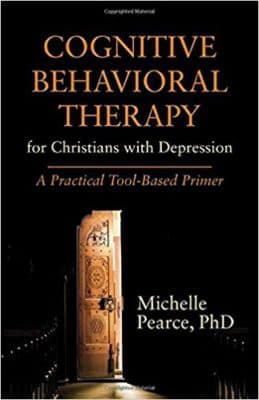
Incorporating the Role Religion Plays for a Client into Treatment
Cognitive Behavioral Therapy for Christians with Depression by Michelle Pearce, PhD is a phenomenal guide to treating religious clients suffering from a depressive episode. It not only provides an evidence based treatment model, but exemplifies the importance of compassion and respect for the client and their values and beliefs that they bring to therapy. Although […]

Tyler Hernandez, M.S.
October 15, 2017

Attachment-Based Family Therapy and Individual Emotion-Focused Therapy for Unresolved Anger
Abstract Twenty-six clients who received 10 weeks of either attachment-based family therapy or individual emotion-focused therapy for unresolved anger toward a parent were interviewed six months after completing treatment. Interviews were analyzed using the consensual qualitative research approach. Clients in both conditions reported improved relationships with parents, gaining a new perspective of their parent, increased […]

Ravit Steinmann + 4 more
October 2, 2017

Conversion Disorder with Psychogenic Seizures and Its Psychological Trauma-Related Etiology
Conversion disorder, formerly known as functional neurological disorder, does not have one known etiology, similar to many other disorders (e.g., schizophrenia, depression, etc.) (Faustman, 1995; Stansfeld & Rasul, 2007). The lack of a specific etiology may be due to the fact that there are various specifiers that can be used within the conversion disorder diagnosis. […]

Kourtney Schroeder, Psy.D.
October 1, 2017

Trauma-Focused Cognitive Behavioral Therapy
Trauma-Focused Cognitive Behavioral Therapy (TF-CBT) was developed by Drs. Anthony Mannarino, Judith Cohen and Esther Deblinger. TF-CBT is an evidence-based treatment that has been evaluated and refined during the past 25 years to help children and adolescents recover after exposure to traumatic life events. TF-CBT is both a phase-based and components-based intervention. The initial focus […]

Anthony P. Mannarino, Ph.D. + 1 more
September 10, 2017

Deliberate Interleaving Practice in Psychotherapy Training
“Do that scale again.” “Do that fingering transition again.” “Let me hear that again.” Even if the scale was correct, it had to be done…again. As a novice musician, the word, “again,” became synonymous with repetitive practice. Practice for the sake of practice, because practice makes perfect. I (voice of 3rd author; true story) had […]

Patrick K. Love, B.S. + 2 more
August 20, 2017