Brief Statement about the Grant Program
The Society for the Advancement of Psychotherapy offers the Charles J. Gelso, Ph.D.,
Psychotherapy Research Grants annually. Each year, three $5,000 grants support
research on psychotherapy process and/or outcome by graduate students, predoctoral
interns, postdoctoral fellows, and psychologists, including early career psychologists.
Eligibility
Graduate students, predoctoral interns, postdoctoral fellows, and psychologists who are
members of the Society for the Advancement of Psychotherapy are eligible. The
Research Committee reserves the right not to award a grant if there are insufficient
submissions or if submissions do not meet the stated criteria.
Program Goals
- Advance understanding of psychotherapy process and/or outcome through support of empirical research
- Encourage talented early-career researchers toward careers in psychotherapy research
- Support psychologists engaged in high-quality psychotherapy research Funding Specifics
- Three annual grants of $5,000 each are paid in one lump sum to the individual researcher, the researcher's university grants and contracts office, or an incorporated company. Indirect costs are not permitted. Individuals who receive funds directly may incur tax liabilities (see the IRS page on Grants to Individuals).
- A researcher may receive only one Gelso grant.
- Funds will be disbursed by December 15 of the year in which the award is announced.
Evaluation Criteria
1. Alignment with the program goals
2. Coherence of theoretical formulation (as presented in the background section)
3. Contribution to the literature
4. Clinical implications (as presented in the Clinical Impact Statement)
5. Method, procedure, and sample
6. Appropriateness of data analysis
7. Plan and timeline for completion
8. Quality of writing
9. Budget justification
10. Applicant's competence to carry out the project
Required Components
Proposal Form Link
Applicants must complete and submit the above application only (do not submit additional attachments, e.g., CVs or letters of recommendation)
The application must include:
- A project description with title, goals, relevant background, target population, method, anticipated outcomes, and dissemination plans
- An abbreviated CV of the principal investigator focused on research activities
- A timeline for completion (priority is given to projects that can be completed within two years)
- A full budget with a justification clearly indicating how grant funds will be spent
- For graduate students, predoctoral interns, and postdoctoral fellows: an abbreviated CV of the supervising mentor and a letter of recommendation from the mentor is included in the application itself.
Grant Terms and Conditions
- Within three months of receiving the award, recipients must submit a short project summary for the Society's website and Psychotherapy Bulletin.
- Recipients must submit a progress summary form every six months until the project is complete, followed by a brief final report summarizing the findings.
- Funds will be released upon documentation of IRB approval.
- Grant funds not spent on the project within two years of receipt must be returned.
- Publications resulting from the research must acknowledge the grant in the author note.
- Individuals who receive funds directly must complete an IRS W-9 form before funds are released and will receive a 1099 after the end of the fiscal year (December 31). Recipients outside the U.S. must complete the appropriate W-8 form (typically W-8BEN).
- Any substantive changes to the approved research plan, budget, or timeline must be reported to and approved by the Society in advance.
Submission Process
- Submit the single application file (no additional attachments) to Tracey A. Martin, Society for the Advancement of Psychotherapy (APA Division 29) Central Office: assnmgmt1@cox.net
- You will receive an electronic confirmation within 24 hours. If you do not receive confirmation, your proposal was not received; please resubmit.
- Submission deadline: March 1
2026 Winners of the Gelso Grant
Lihi Cohen
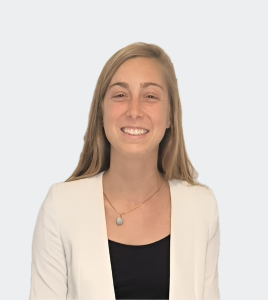
Title: Using Large Language Models to Represent and Discover Patterns of Therapist Responsiveness in Psychotherapy
Description: Decades of research have established that therapists differ substantially in effectiveness (Wampold & Owen, 2021). Therapist responsiveness, the capacity for goal-directed, context-sensitive adaptation to the client's changing states (Stiles et al., 1998), has been increasingly recognized as central to understanding these differences (Watson & Wiseman, 2021). Yet most research on responsiveness has relied on cross-sectional snapshots or aggregated measures that cannot capture what unfolds within the therapeutic dialogue. What is needed is the temporal resolution to observe how therapist and client interact moment by moment: how context gives rise to intervention, and how intervention shapes what follows. This project will (1) develop and validate a computational method for assessing responsiveness as structured Context-Intervention-Outcome (C-I-O) sequences extracted from psychotherapy transcripts using large language models (LLMs), and (2) discover interpretable clinical principles that characterize effective responsiveness. The project will prioritize explainability, producing representations that clinicians can understand and trust, and actionability, generating insight that therapists can use to improve their responsiveness. By linking what the therapist does to what shifts in the patient, the project will produce the first structured, micro-level account of responsiveness across a full treatment sample.
Joshua K. Swift
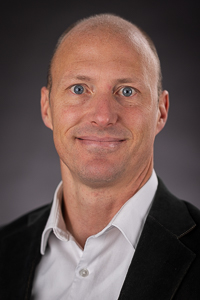 Title: A Randomized Clinical Trial Comparing Process and Outcome Effects of Three Sessions of Psychotherapy with a Human Therapist versus an AI-powered Therapy Chatbot
Description: In recent years, college students have increasingly turned to AI-powered therapy chatbots for help with the distress that they experience in their lives. The goal of the current study is to examine the efficacy of such a practice by comparing process and outcome effects of three sessions with an AI-powered therapy chatbot to three sessions of traditional in-person psychotherapy with a human therapist. Specifically, after the delivery of three sessions of treatment, we will test whether client ratings of the therapeutic alliance, changes in distress levels, goal attainment, and effectiveness differ between the two treatment conditions. We will also examine whether differing participant characteristics predict greater efficacy rates in one treatment over the other. We hypothesize that although both treatment options will show to be effective, more positive outcomes will be seen in the clients who receive psychotherapy from a human therapist. Treatment acceptability variables (i.e., dropout, ratings of acceptability and utility) will also be compared. We also hypothesize that clients in the AI-powered therapy chatbot condition will experience greater effects if they (1) have a greater amount of past experience using AI in general, (2) have had past experience using an AI-chatbot for therapy, (3) have more positive attitudes toward AI in general, (4) have lower levels of distress, and (5) have not had past treatment experience with a human therapist. In contrast, we hypothesize that clients in the human therapist condition will experience more positive effects if they (1) have higher levels of distress and (2) have had past treatment experience with a human therapist.
Eleanor G. Wu
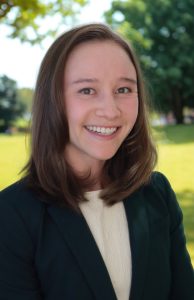
Title: Toward Precision Psychotherapy for Engagement Challenges in Racially Diverse Youth
Description: The proposed project builds on my prior work and advances this line of research through three primary aims: Aim 1: Refine the published taxonomy of EBBs (Wu et al., 2025) by identifying behaviors missing from the current taxonomy. Through consultation with clinical and research experts, this aim will generate a comprehensive, expert-informed taxonomy that reflects the full range of EBBs used to address engagement challenges in psychotherapy for REM youth and families. Aim 2: Develop best practice guidelines that recommend which EBBs to use to address which engagement challenges when working with REM youth and families. Using the Delphi method, experts will share how they would behaviorally respond to clinical vignettes depicting engagement problems commonly experienced by REM youth and families that correspond to different dimensions of the REACH framework (Becker et al., 2018). Experts’ responses will be coded to examine the correspondence between EBBs and the type of engagement problem presented in the vignette. Aim 3: Compare expert-derived patterns of EBB use with those demonstrated by the frontline workforce. Clinical vignettes from Aim 2 will be presented to a large sample of master’s-level clinicians working in publicly funded outpatient settings. Patterns of EBB selection in this sample will be compared to those identified by experts to identify gaps in current practice. These findings will inform the development of a clinician training program in future work that equips frontline clinicians to skillfully employ EBBs to target engagement challenges experienced by REM youth and families.